
- August 2026
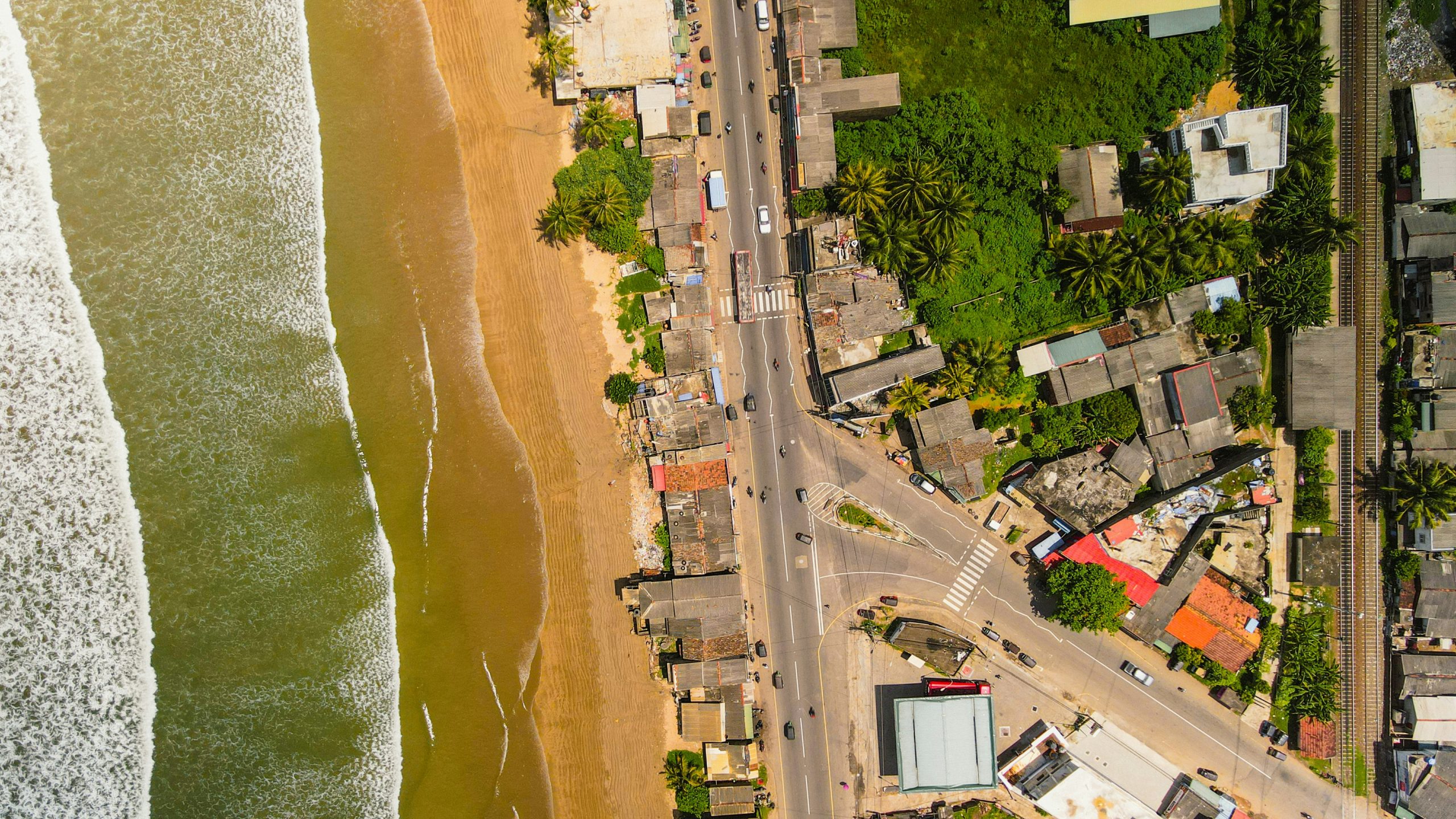
Two Sri Lankan case studies illustrate the challenges Global South nations face in adopting internationally recognised rights-based approaches to climate-induced relocations.
Climate-induced relocation is becoming a prominent adaptive strategy as an increasing number of people are displaced due to climatic hazards. Most countries that are at immediate risk of climate change-induced displacement have low-lying coastal topographies, such as in Kiribati and Fiji, where land is already being lost to sea-level rise. However, as climate change intensifies, island nations like Sri Lanka, considered safe hitherto, must face the possibility of climate-induced displacement and relocation.
Relocation has long been used as a strategy to reduce exposure to hazards in the field of Disaster Risk Reduction (DRR); however, DRR researchers advise using it only as a last resort: especially in the Global South, the fact that relocation policies tend not to be people-centred, alongside funding and capacity constraints, make it difficult to implement projects successfully. Despite these constraints, the Sri Lankan government has initiated several DRR, development, and war-related relocation projects in the past. This article considers two projects which had the combined goals of reducing exposure to tsunamis and floods while improving the socio-economic conditions of relocated communities, and assesses the relative success of each.
Post-2004 Indian Ocean Tsunami relocation
The 2004 Indian Ocean Tsunami was one of the deadliest disasters ever to hit Sri Lanka. Its death toll reached over 35,000 and it destroyed almost 100,000 homes and about 150,000 people’s livelihoods. The estimated damage to infrastructure and capital assets amounted to USD 1 billion, which equalled 4.5% of Sri Lanka’s GDP at the time.[1] What followed this unprecedented disaster was an unprecedented large-scale relocation project, aimed at reducing the exposure of communities to tsunamis and other coastal hazards by (1) providing permanent and legal housing irrespective of previous land ownership and (2) relocating them away from the coastline.
However, relocation was based on provisions of an existing regulation, the Coast Conservation Act No. 57 of 1981, which prohibits developmental activity in the coastal zone without a permit issued by the Director of Coast Conservation. Its focus is primarily on solving issues related to environmental conservation and not disaster-induced relocation.[2] The act was enforced in areas identified as ‘buffer zones’: 100 metres from the shore in western and southern coastal areas and 200m in northern and eastern coastal areas. It is also worth noting that during the 2004 post-tsunami reconstruction efforts, many governments of affected countries were accused of trying to use this opportunity to free up coastal areas for commercial activities and relocating residents to do so.[3] Against this background, coastal communities that were reliant on the sea and the city for their livelihoods in Galle – one of the most affected cities – were relocated as far as 10 to 15km from their previous places of residence, sending long-time urban dwellers to rural areas. Relocation research has identified a myriad negative impacts of this post-tsunami relocation, such as reduced access to the city and the sea, lack of educational and livelihood opportunities in the vicinity, and an inability to integrate with host communities. The relocation process focused extensively on household reconstruction and giving communities legal home and land ownership. However it did not focus enough on where these houses were located, how this would impact people’s access to opportunities and how to minimise the social disruption that occurs as a result of uprooting communities. Most of the post-tsunami relocation projects in Sri Lanka are not considered to have been successful, as more than half of relocatees had migrated back to the buffer zone or elsewhere 20 years after the disaster.[4]
Lunawa Environmental Improvement and Community Development Project
In comparison, the Lunawa Environmental Improvement and Community Development Project (LEI & CDP), a 2002 relocation project that combined the goals of reducing exposure to floods while improving the socio-economic condition of communities in a local council within the Colombo district, can be considered a more successful example of relocation. The project was an extension of the Colombo Flood Control and Environmental Improvement Project, which aimed to mitigate flood damage within selected underdeveloped or old drainage systems in Colombo.[5] Research on the Lunawa Project conducted after relocation revealed that there was high satisfaction among communities regarding their new houses.[5],[6] Communities were actively involved in the planning of the resettlement site during the relocation process, and housing construction took the form of owner-built housing, which ensured a sense of community ownership. When rebuilding, instead of opting for outside contractors, community contractors were given priority, creating employment. In comparison, communities in the post-tsunami relocation project were confined in temporary and transitory shelters without adequate facilities, with no agency or say over relocation activities.[2] Furthermore, the Lunawa Project relocatees were given multiple resettlement options to choose from, and resettlements were located only 5km away from their previous places of residence, in a similar urban area which ensured minimal disruption to their community life and livelihoods. The particular difference between the two projects lies in the fact that, in the Lunawa Project, the relevant government officials and project officials actively worked to engage communities in the rebuilding process, recognising their needs and delivering on promises.
Why relocation projects fail
It is therefore evident that one of the most important indicators of the success of any community relocation project is community satisfaction. While there were many reasons for relocation failures in the post-tsunami reconstruction, one factor stands out: the extent of community participation. In the post-tsunami relocation, people within the buffer zones were offered donor-driven relocation, with the possibility of choosing a settlement. However, in practice, these preferences were not followed through, as there was high demand for resettlement housing in Galle, where land availability was low. Therefore, many communities were relocated to resettlement housing built on available government land in Akmeemana, a rural area 10-15km away from Galle, despite their preferences. While pressures from communities did force the Sri Lankan government to reduce the initial areas of the buffer zone from 200 metres and 100m to 80m and 50m or less in the eastern and southern coastal lines respectively, the relocation of communities nonetheless continued uninterrupted.[4] On the other hand, the Lunawa Project offered three relocation options: settle within four proposed relocation sites, self-relocation with government assistance and settling in the original sites after approval of the plots.[5]
The comparison makes clear that decision-making power in the relocation process lay largely with affected communities in the Lunawa Project, but largely with external entities in the post-tsunami relocation. Other factors had an impact: when it came to financial assistance to construct owner-built houses, the Lunawa Project also offered sufficient compensation; there was a significant lack of coordination between state and local authorities that led to failures in the post-tsunami relocation.[4] But to ensure success in future relocation projects, implementers must ensure active community involvement in all steps of the process through continuous monitoring and evaluation.
Challenges to community integration
Although the solution may be simply stated, implementing such a community integration process is often highly labour-intensive and expensive. Relocation projects are usually financed by entities that are external to the affected community, be it the central government, an NGO or an international donor. These relationships have inherent power structures, where financiers have more decision-making power than beneficiaries, meaning community voices, their needs and their expertise are inevitably drowned out by the more powerful expert voices. This is because local implementation agents are often dependent on aid being realised and tend to go along with donor demands. On the flip side, most of the time, displaced or underserved communities that are dependent on relocation projects for new homes have no power over local implementing agencies, nor do they have direct communication links to donors. Community consultation is often conducted as a way of showing community involvement in the project, but in reality – often under the pressure of circumstances, such as the need for quick solutions – many community concerns go unaddressed.
Yet, one of the biggest criticisms of the Lunawa Project is the high time investment and the financial cost of implementing a community-integrated relocation of this sort.[6] While such projects align more readily with the principles of ‘Build Back Better’, they also place significant financial pressure on implementation agencies. In the Sri Lankan context, welfare spending by the central government has become increasingly constrained due to significant challenges such as civil war and the COVID-19 pandemic, alongside ongoing economic and political crises. Both the projects discussed here were undertaken during the civil war and are two of the very few projects that had sufficient funding to cover the huge financial investment needed for community-integrated projects.
Centralised governance and disempowered local authorities
When the central government’s capacity is compromised in this way, centralised governance and the disempowerment of local authorities can contribute to the failures of relocation projects at a macro level. For instance, any development or relief project is administered through the central government or other central bodies, which are the main decision-making bodies. These decisions are then implemented through provincial, district, and divisional-level institutions. However, local officials are often disempowered, with underdeveloped implementation capacities, and their roles are ill-defined or convoluted.
Sri Lankan local government has a double structure of administrative and political authorities, which often complicates bureaucratic operations.[7] On one hand, State sector officials are often subject experts but have little connection to grassroots communities; on the other hand, political authorities enjoy a mandate from the people, but when they intervene in administrative processes to solve community issues, communities develop a sense of dependency. Furthermore, while continuous monitoring, evaluation, learning and changing of existing strategies are needed to ensure the success of relocation projects, local political officials’ capacity to do this is inhibited by macro-level socio-economic factors. And when these issues are not addressed, people resort to their own adaptive strategies, such as moving out of relocation sites and migrating back to their previous places of residence, as in the case of post-tsunami relocation in Sri Lanka.
Self-determination through economic empowerment
As this article has explored, in the case of Sri Lanka, relocation projects fail due to a lack of active community involvement, which is undermined for two main reasons: (1) the nature of the donor-beneficiary relationship, in which community voices are obscured due to inherent power relations, and (2) the existing local governance structure, which is tasked with representing local voices but lacks the power to do so. While the latter is a result of political marginalisation, the former is a result of the economic and social marginalisation of affected communities. Since power relations determine the implementation and outcome of relocation projects, affected communities must have either financial or political power in order to influence them. Thus what is fundamental to administering successful relocation projects is ensuring communities’ right to self-determination, which goes beyond simple community integration.
However, Sri Lanka is a welfare state going through economic recovery, therefore community empowerment through capacity development cannot be financed entirely by central authorities. We argue that the self-determination of communities must be ensured through political decentralisation, facilitated by the economic and social empowerment of local authorities and communities. While we do not recommend that entire relocation projects are funded by local governments, as that is simply not feasible, initial support from central government funding or from global financial institutions would enhance their capacity to outsource certain components, such as continuous monitoring and evaluation, land selection and provision of local infrastructure, livelihood support and social integration. When local authorities have more power over their own streams of income, it not only reduces the burden on central government in administering funds but also reduces the say of central government in local projects. This would also give local stakeholders – communities, local officials and local politicians – greater incentive to cooperate, as the success of most relocation projects would then be based on their own ability to negotiate, finance, and implement them. It would also significantly reduce the financial burden on central authorities, meaning they would have more capacity to fund much-needed relocation projects for those in vulnerable locations.
Nishara Fernando
Professor in Sociology, Department of Sociology, University of Colombo
nishara.fernando@soc.cmb.ac.lk
linkedin.com/in/nishara-fernando-0947b721/
Yeshani Fernando
Research Associate, Marga Institue
yeshanifdo@gmail.com
linkedin.com/in/yeshanifdo/
[1] DMC (2023) National Disaster Management Plan 2022-2030. Colombo, Sri Lanka: Disaster Management Centre
[2] Jayasuriya S, Steele P, and Weerakoon D (2006) ‘Post-Tsunami Recovery: Issues and Challenges in Sri Lanka’, ADBI Research Paper Series No 71, Asian Development Bank Institute (ADBI), Tokyo
[3]Asian Coalition for Housing Rights (ACHR) (2005) ‘Housing by People in Asia’, No 16, August
[4] Fernando N, Amaratunga D, Haigh R, De Silva M and Fernando Y (2024) ‘The Long-term Impact of Forced Relocation 20 Years After the 2004 Indian Ocean Tsunami: A Case Study of Selected Relocation Settlements in Galle and Batticaloa, Sri Lanka’, in Pattiaratchi C, Amaratunga D and Senaratne R (eds) Tsunami Science in Sri Lanka, University of Western Australia
[5] Fernando N (2018) ‘Voluntary or involuntary relocation of underserved settlers in the city of Colombo as a Flood Risk Reduction Strategy: A Case Study of Three Relocation Projects’, Procedia Engineering 212: 1026-1033
[6] UN-Habitat (2009) Innovative Approaches for Involuntary Resettlement: Lunawa Environmental Improvement & Community Development Project
[7] Bigdon C (2006) Good Governance and Conflict Transformation in Sri Lanka: A Political Analysis of People’s Perceptions of Institutions at the Local Level and the Challenges of Decentralised Governance (doctoral dissertation)
READ THE FULL ISSUE