
- August 2026
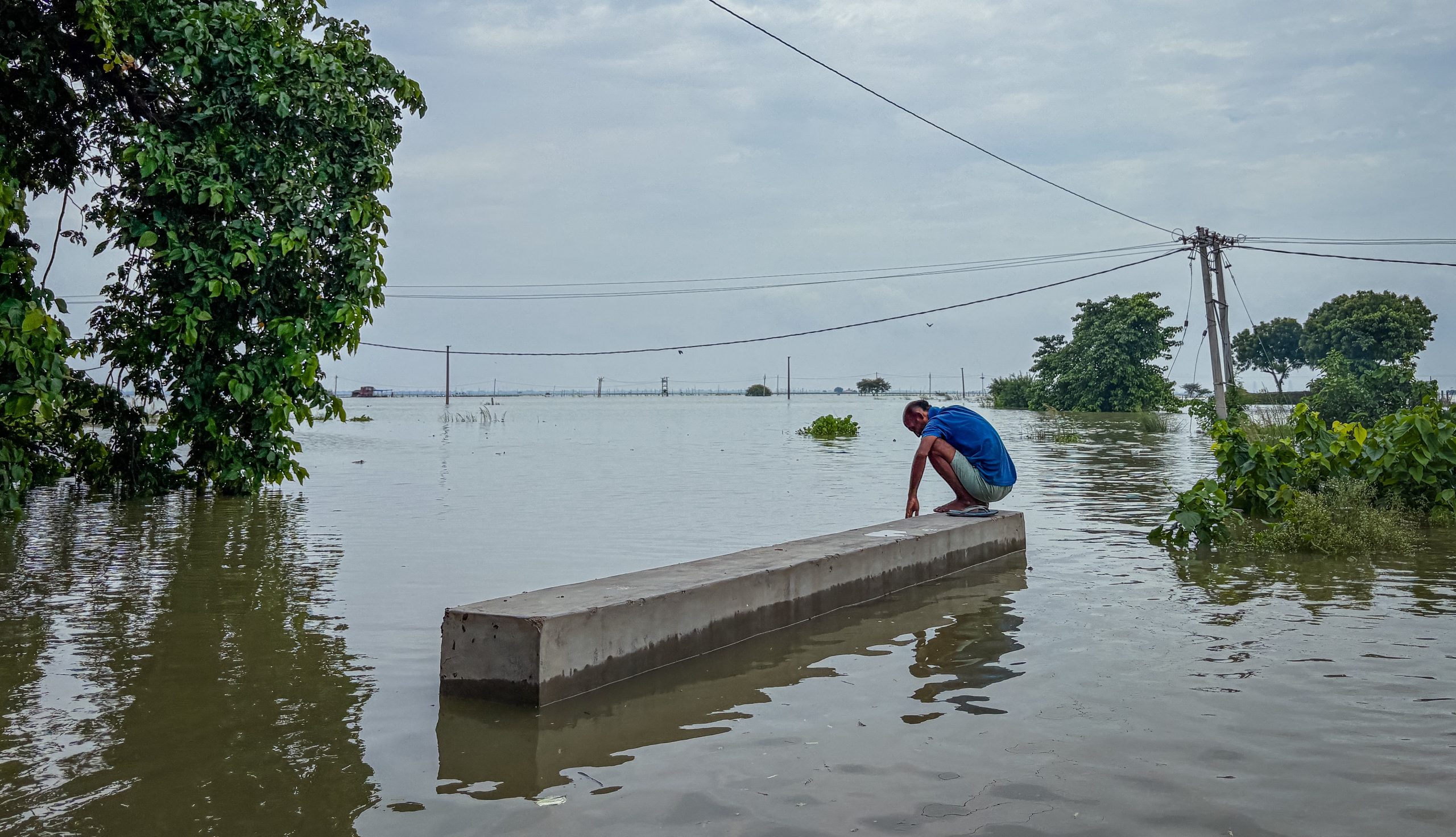
Despite political divisions, South Asia can build on existing bilateral agreements and work through existing regional bodies, supported by the Global Compact for Migration, to create a regional framework for climate mobility governance that ensures dignity.
In South Asia, one of the world’s most climate-vulnerable regions, those affected by the devastating impacts of climate change are on the move. However, the lack of a protection framework for human mobility driven by climate change leaves them vulnerable. Political divisions in a profoundly diverse region like South Asia hinder the negotiation of a multilateral treaty, but existing bilateral agreements between countries could be expanded with climate mobility clauses to allow emergency visas, humanitarian corridors and temporary relocation. Anchoring such bilateral innovations in platforms like the South Asian Association for Regional Cooperation (SAARC) or the Bay of Bengal Initiative for Multi-Sectoral Technical and Economic Cooperation (BIMSTEC) could gradually build towards a regional framework that ensures dignity, protection and opportunity for communities displaced by climate change.
Using existing and new bilateral agreements
In a region marked by political instability and significant diversity, negotiating a multilateral instrument that requires consensus among multiple stakeholders can be a particularly slow process. Countries most affected by climate crises often cannot wait for regional approvals before taking action. In such contexts, bilateral agreements between neighbouring countries facing shared climate risks are a more achievable and politically feasible option. At present, the South Asian region has no bilateral agreements specifically addressing cross-border human mobility driven by climate change. However, there are existing agreements between South Asian countries which offer a foundation on which to build. For instance, climate-induced movement is a growing concern in the Bangladesh-India Sundarbans region. Instead of negotiating a fresh treaty, the existing 2011 India-Bangladesh Memorandum of Understanding on the Sundarbans could be expanded with a Climate Mobility Protocol for residents of erosion-prone districts.[1] This could allow pre-emptive temporary relocation and cross-border movement during cyclones or extreme tidal surges. The MoU’s Joint Working Group could be tasked with knowledge sharing, research and the development of practical relocation logistics.
Similarly, the 1996 India-Bangladesh Ganges Water Sharing Treaty could incorporate an activation trigger that leads to the issuance of temporary mobility permits or opens humanitarian corridors when flood or drought alerts reach pre-defined thresholds in specified areas. Free movement treaties like the 1950 India-Nepal Treaty and the 1949 India-Bhutan Treaty could be amended with a climate mobility protocol to create time-bound humanitarian stay pathways for areas severely affected by climate crises.[2] For climate change-induced coastal displacement the Maritime Rescue Coordination Centres (MRCC), an India-Sri Lanka initiative, which already manage cross-border coordination, could prove beneficial. They could support climate mobility by providing information and support for rescue operations in areas where climate change leads to coastal displacement. Repurposing existing bilateral agreements maximises the utilisation of established structures and reduces the administrative and financial burden on countries.
While existing bilateral agreements are a good place to start for governance initiatives addressing human mobility driven by climate change, they were drafted with other objectives, like trade or river management, and often do not provide for human rights guarantees.[3] Countries in the region should, therefore, also negotiate exclusive bilateral agreements for managing climate mobility. Domestic disaster management and climate adaptation frameworks in the region already provide for early warning systems[4], shelter mechanisms[5] and relief protocols[6], which can be plugged into new bilateral agreements, making human mobility driven by climate change predictable, rights based[7] and regionally coordinated instead of an ad hoc arrangement.
Redesigning regional platforms
In terms of regional governance, the natural first step is to look at existing regional platforms that could anchor and guide cooperation, of which the South Asian Association for Regional Cooperation (SAARC) is the most obvious. However, SAARC’s effectiveness has long been undermined by political tensions amongst member states, leading to bureaucratic gridlock and stalling implementation of regional initiatives. Given these circumstances, the of Bengal Initiative for Multi-Sectoral Technical and Economic Cooperation (BIMSTEC), with relatively strategic membership and fewer political veto points, offers a more functional space for regional cooperation in matters related to climate mobility.[8]
BIMSTEC’s emphasis on cross-border cultural exchange and tourism circuits, educational or cultural visa relaxations, and educational and STEM cooperation, could be expanded to design humanitarian mobility pathways and knowledge infrastructure for mobility driven by climate change. With its aspiration for observer status in the UN and the UN Framework Convention on Climate Change it would be in a position to frame climate mobility as a regional priority. Its existing focus areas, such as disaster management, environment and connectivity, could be expanded to incorporate climate mobility protocols, including cross-border evacuation mechanisms, humanitarian corridors and livelihood support for displaced persons.
For instance, BIMSTEC’s Centre for Weather and Climate, which supports capacity building in forecasting, early warning and monitoring systems, could be utilised as a built-in foundation for cross-border early warning systems that could trigger human mobility protocols. BIMSTEC’s 2025 Vision Statement under its ‘Bangkok Vision 2030’ offers a means to embed practical climate mobility measures into regional cooperation. The Vision Statement prioritises a collective response to transboundary climate risks, by managing disaster systems via the Centre for Weather and Climate, and by fostering technical collaboration through the proposed Himalayan Science Council.[9] All of this gives BIMSTEC the flexibility and mandate to adopt a climate mobility protocol, like the Intergovernmental Authority on Development (IGAD) Protocol on Free Movement in the Horn of Africa. South Asian countries could develop flexible issue-based collaborations and pilot bilateral climate mobility agreements under BIMSTEC, especially since there is no requirement for strict consensus among all member countries. Like East Africa, where communities have traditionally moved across borders for trade and labour, South Asia has a longstanding history of cross-border movements. For instance, the India-Nepal free movement regime has open borders, with citizens travelling freely for trade, work and education. A reciprocal agreement between India and Myanmar enabled free movement across borders based on ethnic and familial ties.
Unfortunately, in recent times the Indian government has called for suspension of the free movement regime between India and Myanmar. This suspension has met with resistance from the bordering state governments and local authorities. Instead of scrapping free movement regimes, South Asian countries, taking into account existing mobility patterns, should develop a climate mobility framework, one that ensures humanitarian protection and familial continuity, through mechanisms like temporary humanitarian stays and emergency visas between willing partner countries. Furthermore, along the lines of the IGAD Protocol, adopting a phased approach, starting with short-term entry and visa-free travel, then temporary residential and labour mobility, followed by broader humanitarian protection, each stage taking a couple of years to implement, could reassure South Asian leaders regarding the pace of implementation and cooperation and eventually build political confidence. Pilot issue-based bilateral collaborations can be scaled into broader regional protocols under BIMSTEC, following IGAD’s incremental, issue-based strategy. While BIMSTEC seems like the most practical platform for issue-based cooperation agreement in the region, it suffers from limited institutional capacity, lack of dedicated funds for operational projects and overlapping memberships and mandates that often result in uneven political commitment.[10]
The Global Compact for Migration: a parallel track
If discussions at regional level come to a standstill, the Global Compact for Safe, Orderly and Regular Migration (GCM) offers a valuable bridging mechanism and can be used to complement regional mechanisms. Almost all the South Asian countries have endorsed the GCM, which provides a normative framework directly relevant to climate mobility, with objectives on reducing drivers of displacement (Objective 2), creating safe and regular pathways (Objective 5), protecting vulnerable migrants (Objective 7), safe and dignified return and admission (Objective 21) and enhancing international cooperation and global partnerships (Objective 23). GCM platforms through the UN Network on Migration and its regional hubs provide politically neutral technical spaces for state cooperation on climate mobility, even when regional forums are at an impasse. Through its International Migration Review Forum and regional reviews, the GCM also offers South Asian countries opportunities to showcase bilateral or national initiatives. Crucially, the Migration Multi-Partner Trust Fund under the GCM channels international donor resources to projects that operationalise GCM commitments, including climate mobility. South Asian countries can apply for such funding, bypassing regional bottlenecks.
However, the GCM cannot substitute for the long-term institution-building and regional ownership that SAARC or BIMSTEC could provide. It does not generate binding regional commitments or tailor solutions to South Asia’s specific geographic and socio-political realities, such as shared river basins or porous land borders. The most strategic approach, therefore, is to use the GCM as a parallel track, sustaining cooperation, knowledge exchange and funding access during periods of regional political turmoil. Over time, it would provide the groundwork for a stronger, more regionally rooted climate mobility framework.
Lessons from other regions
In designing a climate mobility framework for South Asia, valuable lessons can be drawn from Africa, the Pacific and the Americas. The Australian-Tuvalu Falepili Union Treaty in the Pacific offers an example of a bilateral agreement that explicitly links climate change and human mobility. However, it is not without limitations. Its context-specific design, limited migration quota and entangling of mobility with a security and defence clause granting Australia significant control over Tuvalu’s strategic decisions mean that it should be regarded as an instructive precedent in formally recognising climate change as a driver of human mobility rather than a model for replication in South Asia.
The IGAD Protocol in East Africa, mentioned above, is one of the first regional instruments to explicitly incorporate climate mobility considerations into a free movement protocol. The IGAD Protocol recognises movement in anticipation of, during and after disasters. It allows admission and stay in IGAD member States for persons affected by disasters. It integrates early warning systems with mobility rights, ensuring affected populations can cross borders with simplified documentation and can seek employment opportunities in host countries, in accordance with national laws. The IGAD trigger warning model could be adapted to South Asia’s flood- and cyclone-prone areas by linking early warning systems to temporary cross-border humanitarian stays.
In the Americas, the Regional Conference on Migration’s (RCM) Guide to Effective Practices provides operational guidance for humanitarian admission in disasters, including flexible documentation rules, reception standards, anti-trafficking safeguards and coordination mechanisms between border agencies.[11] Incorporating similar clauses into South Asian bilateral agreements would allow for rights-respecting humanitarian stay permits. Thus, by weaving together IGAD’s triggered mobility clauses and the RCM’s operational checklists, States in South Asia may enter into bilateral agreements, issue-specific arrangements that align with BIMSTEC commitments but are not part of a broader institutional framework, which would act as stepping stones to a future regional climate mobility framework, even in a politically divided environment.
Final thoughts
Countries in South Asia have struggled to arrive at a comprehensive multilateral climate mobility treaty, at least in the short term. Although IGAD in East Africa has arguably managed to create a climate mobility instrument in a fragile, conflict-prone region, South Asia is more politically divided and lacks a shared refugee framework, making it difficult to move beyond bilateralism. Thus, bilateral agreements are the most feasible form of governance for human mobility driven by climate change in a region which lacks any precedent for managing such mobility. These agreements could be endorsed by BIMSTEC, giving it more legitimacy and visibility, and could act as pilot projects from which best practice and technical guidelines could be sourced for a regional framework under BIMSTEC.[12] Moreover, leveraging BIMSTEC allows countries to tap into international funding, especially now that it is seeking UN observer status, which would allow it to lobby more effectively for climate-related funding. Given its apolitical cooperation model, BIMSTEC might be better placed than SAARC to leverage donor resources for human mobility driven by climate change. Over time, a set of shared norms with enhanced funding options and strengthened institutions could gradually evolve into a broader regional framework. In this way, BIMSTEC could provide a pragmatic middle ground that would not replace the need for bilateral agreements but instead acts as a platform that connects and strengthens them, paving the way for a long-term framework for climate mobility in South Asia.
Sohini Chowdhury
Catalyst for Change Fellow, Displacement, Movement and Inclusion Programme at Margins to Access Project (erstwhile Migration and Asylum Project) New Delhi, India
sohini@aratrust.in
Saie Shetye
Project Coordinator, Displacement, Movement and Inclusion Programme at Margins to Access Project (erstwhile Migration and Asylum Project) New Delhi, India
saie@aratrust.in
[1] The Third Pole (2024) ‘India and Bangladesh must address climate migration together’
[2] Regional Conference on Migration and The Nansen Initiative (2016) Protection for persons moving across borders in the context of disasters: A guide to effective practices for RCM member countries
[3] Wood T (2022) ‘The Role of Free Movement Agreements in Addressing Climate Mobility’, Forced Migration Review 69
[4] MoEF Bangladesh (2008) Bangladesh Climate Change Strategy And Action Plan 2008 (updated in 2019)
[5] NIDM India ‘National Disaster Management Authority Guidelines on Minimum Standards of Relief 2016’
[6] NDM India ‘Disaster Management Act 2005’
[7] Government of Nepal (2021) National Adaptation Plan 2021-2050
[8] ORF (2018) ‘SAARC vs BIMSTEC: The Search for the Ideal Platform for Regional Cooperation’, ORF Issue Brief No. 226
[9] ORF (2025) ‘BIMSTEC’s Bangkok Vision 2030: Aspiration Amidst Adversity’
[10] ORF (2023) ‘BIMSTEC: A Call for Robust Institutionalisation’
[11] Kälin W and Cantor D J (2017) ‘The RCM Guide: a novel protection tool for cross-border disaster-induced displacement in the Americas’, Forced Migration Review 56
[12] The Kaldor Centre Principles on Climate Mobility offer an existing example of best practice which could be utilised as normative guidance, while generating practical lessons to inform a future regional framework.
READ THE FULL ISSUE