
- September 2026
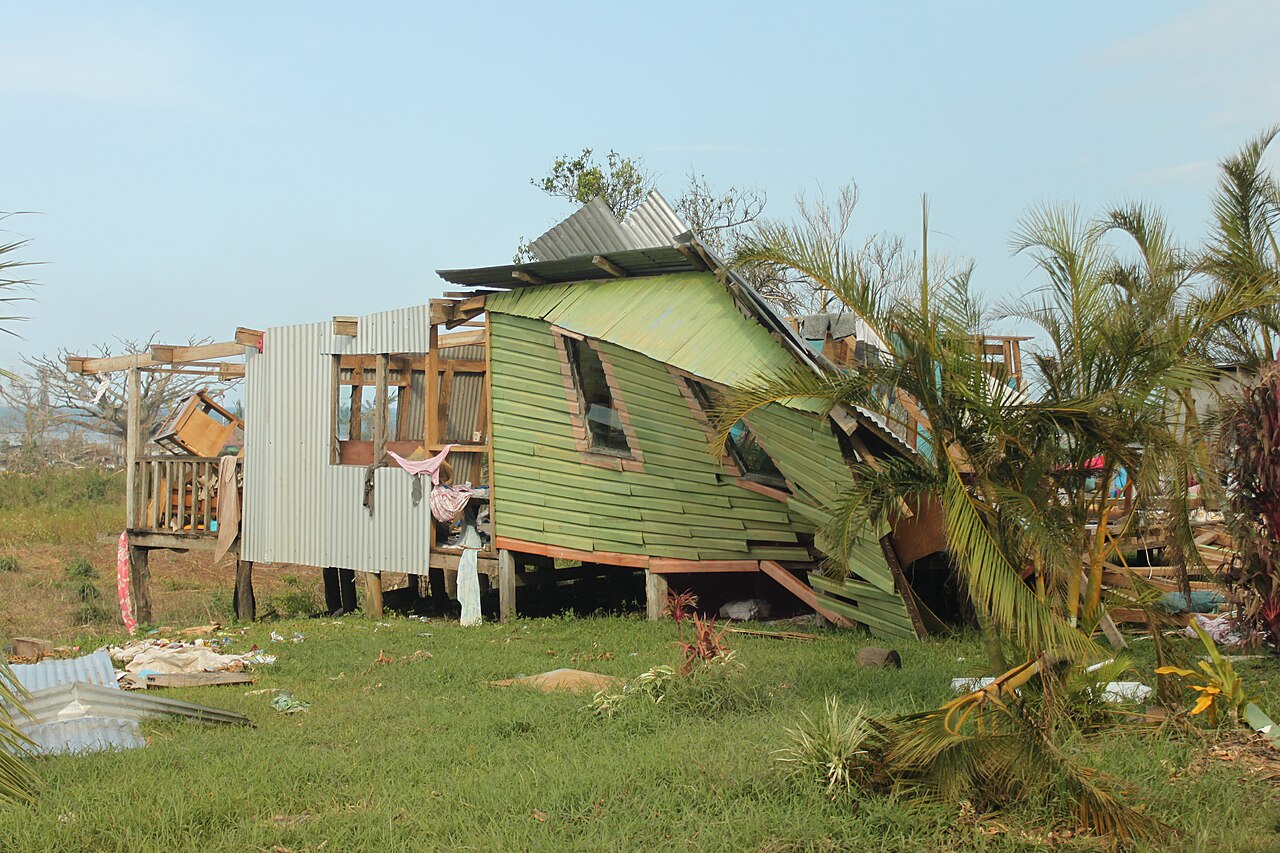
The Pacific comprises one of the most climate-vulnerable regions in the world. When adopting relocation as a climate adaptation strategy, policymakers and communities must consider whether proposed areas are ‘reasonable’ and ‘relevant’ alternatives.
Pacific Island Countries and Territories (PICTs) have adopted various adaptation strategies to address rising sea levels, coastal erosion and extreme weather events, among which planned relocation features prominently.
Planned relocation initiatives are usually the result of extensive consultations, especially with local communities, coastal settlements and traditional leaders. The concerns voiced through this participatory approach focus on notions of safety and security (physical security and security of water, food and income) and on health factors, including the wellbeing of the ecosystem itself and of the affected populations’ customary relationship with it, which in turn informs their latent right to immobility.[1]
These considerations echo the general and individual circumstances assessed in the internal flight/relocation alternative analysis (IFA/IRA). The IFA/IRA forms part of traditional refugee status determination (RSD) and refers to relocation to a specific area within an asylum-seeker’s country of origin where there is no well-founded fear of persecution. This article argues that the safeguards against undue hardship and risks of harm in the alternative internal location (AIL) may be translatable to planned relocation exercises in the context of climate-induced displacement.
In the same manner that climate change considerations are increasingly factored in as part of the IFA/IRA assessment in RSD procedures through its ‘reasonableness’ and ‘relevance’ tests (see below), the IFA/IRA concept itself may in turn prove a useful benchmark to inform planned relocation initiatives by providing a clear analytical framework and key procedural guarantees against which affected populations and policymakers may gauge the relevance and the reasonableness of a (planned) relocation area.
By reflecting on initiatives adopted by PICTs to adapt to climate-induced displacement, as well as the practical application of IFA/IRA globally, this article aims to draw attention to the complementarities of both regimes, in light of recent authoritative interpretations by the International Court of Justice (ICJ) and the Inter-American Court of Human Rights (IACtHR) regarding States’ obligations concerning climate change.
International cooperation for a durable solution
The PICTs are a relatively well-defined ensemble of 14 sovereign countries and territories, stretching from Palau at its westernmost point to Cook Islands at its easternmost.[2] For the last few decades, all PICTs have adopted an array of instruments in the area of climate change, ranging from climate change policies to more operational tools, such as planned relocation guidelines.
Notably, all PICTs concur that relocation should only be considered as a measure of last resort, and in agreement with the affected populations. For example, Samoa has adopted a Community Integrated Management Plan through which it aims to support local communities to adapt to the impact of climate change while articulating their right to stay in place.
Aware of the shared challenges climate change entails, the PICTs have increasingly sought regional responses, through platforms such as the Pacific Island Forum (PIF), under the umbrella of which they adopted the Pacific Regional Framework on Climate Mobility (PRFCM) in 2024. Underpinned by a rights-based and people-centred approach (para. 3), the PRFCM confirms the undesirability of planned relocation (paras. 18-22) and reiterates that planned relocation must provide those relocated with conditions where they can rebuild, restore and improve their lives and maintain their cultures, including by ensuring access to healthcare, adequate housing, decent work, education, social protection and water and food security (paras. 23-27).
An alternative life that is relevant and reasonable
In the context of the Advisory Opinion of the ICJ on the Obligations of States in respect of Climate Change delivered on 23rd July 2025, originally requested by the Government of Tuvalu, and a process in which every PICT participated individually, the Marshall Islands highlighted in its written submissions that, “[T]he existing international regulatory framework governing refugees does not recognise climate change, or any of its adverse effects, such as sea-level rise, as a situation that merits the recognition of protected status” (para. 114). While exploring this lack of recognition is beyond the scope of this article, the effects of climate change have still found their way into traditional RSD procedures. In fact, climate change is considered a risk exacerbator and a contributing factor to conflict and persecution, the impact of which may be taken into consideration as part of the IFA/IRA analysis.
The IFA/IRA analysis has been refined over the years, most notably by the UNHCR’s Guidelines on International Protection No. 4: Internal Flight or Relocation Alternative and is now generally structured around the cumulative relevance and reasonableness tests.
The relevance test
The relevance analysis responds to the question of whether the alternative internal location (AIL) is safe and whether the asylum seeker would be protected there. While the test enquires into the nature of the agent of persecution, in a planned relocation scenario the question may be formulated as requiring assurances that the effects of climate change (in other words, the persecuting agent, mutatis mutandis) do not reach the AIL.
The European Union Asylum Agency (EUAA) in its 2021 Practical Guide on the Application of the Internal Protection Alternative states that if the applicant holds a well-founded fear of serious harm in his or her area of origin it must be absent in the proposed AIL. It also states that the persecuting agent in the area of origin must not be likely to pursue the applicant to the AIL. Both guidance materials concur that the State protection available in the AIL must be effective and durable.
In the context of climate-induced forced displacement, it is difficult to argue for the durable nature of any State protection available against the effects of climate change, which has been forecast to engulf the PICTs progressively over the next few decades. This is particularly relevant considering that the IFA/IRA analysis is forward-looking in the same way that the well-founded fear of persecution is, namely that the evaluation must assess whether a proposed relocation area provides a meaningful, safe alternative in the future. The written submissions of Solomon Islands before the ICJ are quite enlightening in this regard: “With sea-levels rising three times higher than the global average, Solomons anticipates losing further islands to inundation or uninhabitability in the near future, potentially displacing over 4,000 people per year” (para. 21). In a similar vein, Fiji’s Displacement Guidelines foresee specific provisions for the scenario in which temporary relocation becomes permanent displacement, with a focus on securing a sustainable livelihood.
In fact, the UNHCR Guidelines confirm that the Applicant “cannot be expected to relocate to another area of serious harm […], including a serious risk to life, safety, liberty, or health, irrespective of whether or not there is a link to one of the Convention grounds”, thereby opening the door to harms triggered by the impact of climate change as well. This is a notion which is often misapplied in traditional RSD, whereby adjudicators may be satisfied if the original source of harm is not present in the AIL, without investigating the existence of any other sources of risks in the AIL.
One additional factor to consider when assessing the relevance of an AIL is its accessibility, namely whether the applicant may legally, safely and practically reach the AIL. In this vein, while the size of some PICTs is indeed small, most of these nations or territories are archipelagos comprising several dozens or hundreds of islands scattered through a vast oceanic territory (such as Kiribati, which extends over 1.3 million km2). In its written submissions to the ICJ, Solomon Islands noted that: “Many [of these] communities are extremely remote and transport between these places and [the capital] Honiara is expensive, infrequent and often unreliable” (para. 20).
The reasonableness test
This test aims to explore whether the applicant may relocate to an AIL without facing undue hardship. While the standard of hardship in general is difficult to gauge, the UNHCR Guidelines only advise that “it would be unreasonable[…] to expect a person to relocate to face economic destitution” (para. 29). In the same vein, the EUAA Practical Guide clarifies that, “The mere survival of the applicant and the absence of torture, inhuman or degrading treatment or punishment in the considered location are not sufficient […]” (p. 23). On the other side of the weighing exercise, the Practical Guide also considers that the reasonableness test would not require the “unaltered continuation of the Applicant’s previous life” (p. 26).
In the context of Pacific Islanders’ deep connection to their lands and oceans, it is debatable whether moving coastal peoples inland or relocating a farmer to a different island might be reasonable, especially if it involves “abstaining from practices fundamental to their identity”, as cautioned by the EUAA Practical Guide (p. 18). This is also stressed by the UNHCR Guidelines, which affirm that, “If a person would be denied access to land, resources and protection [in the AIL] because he or she does not belong to the dominant clan, tribe, ethnic, religious and/or cultural group, relocation would not be reasonable” (para. 30).
As mentioned above, this reflects the provision in the Pacific Regional Framework on Climate Mobility that makes planned relocations subject to “conditions to rebuild, restore and improve lives and maintain cultures” (para. 24). While capitals and urban areas are often considered to meet the above requirements, overpopulation, pollution, insufficient public services or street violence are leading more and more adjudicators to rule them out as AILs, as has been the case for Kinshasa, Mexico City and Tehran.
The standard for undue hardship in the AIL must also be assessed against individual considerations. In practice, the classification of the applicant as a vulnerable person and/or as a person with specific needs should always determine the reasonableness of their relocation. In a climate-induced displacement context, the Papua New Guinea (PNG) National Adaptation Plan requires first the development of “vulnerability assessments for expected climate impacts on migration and relocation, as well as implications for resettlement, gender and social inclusion”, when developing a strategy for planned relocation.
Among individual circumstances, any previous stay of the applicant in the AIL and/or the existence of a support or family network will carry significant weight in determining whether the applicant should be able to provide sufficiently for themself. In a similar vein, in the context of climate-induced displacement, the Nauru Framework for Climate Change Adaptation and Disaster Risk Reduction requires that dialysis patients are always accompanied in a planned relocation scenario, as a practical instance of assisted relocation for individuals with specific needs.
However, additional contextual reservations regarding an AIL may be identified related to forced separation from traditional knowledge systems, including separation from ancestral lands and oceans, the lack of local knowledge and language in the AIL, or cultural and religious considerations. For example, the islands of Tamare and Arorae in Kiribati maintain a one-religion only tradition, which may prove a significant barrier towards local integration.
Solomon Islands has proved particularly sensitive to ethnic considerations when identifying AILs. In its written submissions before the ICJ, it indicated that: “In a State where 80 per cent of land is under customary tenure, displacement fuels land disputes, leads to a loss of traditional ways of life, and severely undermines local culture” (para. 21). Therefore, it is no surprise that its Planned Relocation Guidelines offer a step-by-step roadmap on the decision to relocate and the identification of a relocation site, listing key factors such as “the preferences of the Relocating Community; proximity to their Original Site; access to natural resources including coastal and marine areas; sources of traditional livelihoods including fishing and gardening; accessibility of water, sanitation, electricity, transportation, education and health services, and markets” (p. 17).
Reflections and recommendations
While climate change may not yet be recognised as grounds of its own to claim refugee status under international refugee law, the architecture of the IFA/IRA analysis may bring the languages of persecution-based international protection and of forced displacement in the context of climate change closer together. The effects of climate change may render an AIL irrelevant and relocation therein unreasonable. The relevance and reasonable tests could in turn inform the design and implementation of adaptation strategies, especially planned relocation.
The increased use of IFA/IRA analyses is timely. At the time of writing, an implementation plan for the Pacific Regional Framework on Climate Mobility (PRFCM) is in the works under the leadership of the Pacific Island Forum. At the global level, a bold call for action was launched by the IACtHR in its Advisory Opinion on the Climate Emergency and Human Rights (AO-32/25), of 3rd July 2025, demanding that States have “regulatory, political, institutional and budgetary instruments” in place to cope with involuntary climate-induced migration, including through the provision of measures such as “safe evacuation routes and supportive assistance from official institutions, as well as state plans for accommodation, return and – as ultima ratio and strictly subject to detailed procedural guarantees – relocation” (paras 425-429). The existence of such mechanisms extending State protection to relocated individuals also remains a pre-condition to consider an AIL as relevant (UNHCR Guidelines, para. 15).
Both Advisory Opinions by the IACtHR and the ICJ, as well as the PRFCM, require that any initiative in the sphere of climate change must be rights-based, inclusive and participatory. Under burden of proof rules in the IFA/IRA analysis, it is for the adjudicator (that is, the policymaker) to argue for the relevance and reasonableness of an AIL, while affected populations must be provided with the opportunity to challenge in an effective manner the presumption of adequacy of the AIL, safeguards that may equally apply to consultation processes for planned relocation. These procedural guarantees could therefore also be used to help shape the necessary consultative approaches. In fact, it is often a poor practice observed by UNHCR that the adequacy of an IFA/IRA is assumed by the adjudicator without giving the applicant the chance to comment on it or to explain how it may not be suitable due to their personal circumstances, an individual assessment that at times is altogether omitted in the analysis.
Advocates may seize the opportunity provided by both Advisory Opinions. In paving the way forward, the blueprint framework of the PRFCM and good practices from the PICTs should be reinforced by the procedural safeguards of the IFA/IRA analysis, to the benefit of forcibly displaced persons in need of relocation, regardless the underlying cause.
Markel Redondo Ibarrondo
Former Associate Protection Officer, UNHCR Multi-Country Office in Canberra
markel.redondo.i@gmail.com
The author would like to thank the UNHCR Pacific Protection team in Canberra.
Disclaimer: The author’s views are his own and do not necessarily represent those of UNHCR.
[1] Bird M D, Castro M and Freier L F (2025) Immobility in Fragile Contexts: Between Dignity, Rootedness, and Migration: A comparative study in Latin America and Africa, Ayuda en Acción.
[2]The Pacific Island Countries and Territories (PICTs) comprise Cook Islands, Fiji, Kiribati, Marshall Islands, Federated States of Micronesia, Nauru, Niue, Palau, Papua New Guinea, Samoa, Solomon Islands, Tonga, and Tuvalu.
READ THE FULL ISSUE