
- May 2026
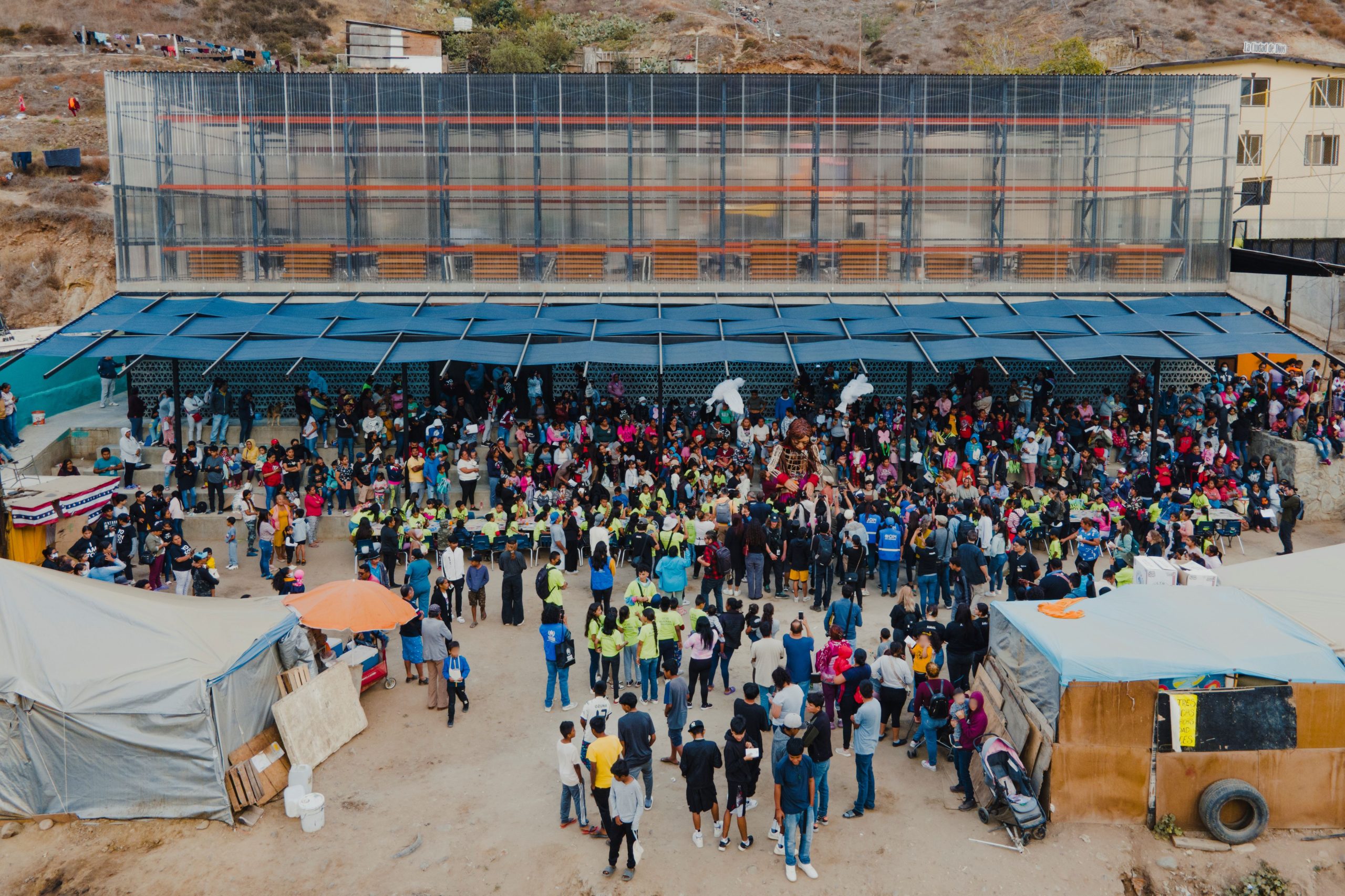
A hybrid approach that integrates refugees and migrants into urban neighbourhoods while offering structured support and emphasising ecological restoration offers a promising new model for the settlement of people displaced by climate change.
Existing responses to refugee settlement are typically structured along a spectrum, ranging from long-term camps to unstructured urban self-settlement. Camps, although initially designed for short-term humanitarian needs, frequently become long-term, creating parallel societies and limiting opportunities for integration. Urban self-settlement, experienced by more than 70% of refugees worldwide, allows greater mobility and autonomy but often leaves refugees without adequate protection, formal employment opportunities or access to essential services.
Neither model adequately addresses the intersecting challenges posed by expected climate-related displacement, such as environmental degradation in host communities or the tendency for refugees to be concentrated in areas with heightened climate vulnerability.[1] This challenge is compounded by the fact that refugees in urban areas often settle in the poorest, most climate-vulnerable neighbourhoods, already burdened by pollution, water and food scarcity and other environmental risks. Border cities like Tijuana in Baja California, Mexico, will feel increasingly squeezed between northward migration pressures from the south and border closure and control from the north. This gap highlights the need for hybrid solutions that combine the stability and support of structured settlements with the inclusion and opportunities of urban integration.
The Sanctuary Neighbourhood Model
The Sanctuary Neighbourhood Model is a hybrid approach to refugee hosting that integrates displaced people into urban neighbourhoods shared with local residents, combining structured support, community-led governance and ecological restoration to foster long-term social, economic and environmental resilience. Within this model, refugees live alongside local residents, participating in the construction of their housing and collective spaces and taking part in shared daily activities, such as gardening, cooking, cleaning and maintenance, security, medical transportation and youth education. The model provides structured support, like vocational training, pre-kindergarten through grade 12 education and healthcare and cultural and spiritual opportunities, such as craft workshops, faith-based community gatherings and holiday celebrations, while also promoting self-reliance through economic opportunities and shared governance. Ecological restoration, such as planting native species and improving local infrastructure, is built into the design so that both refugees and host communities benefit, making the model socially, economically and environmentally sustainable.
The model does not replace the essential role of international agencies or government institutions; rather, it offers a scalable, community-driven and cost-effective alternative to conventional approaches. The model also links climate rehabilitation efforts with trauma-recovery workshops, connecting ecological restoration to psychosocial healing.
Implementation in Tijuana
Santuario Frontera is the application of the Sanctuary Neighbourhood Model in Tijuana. It is part of the University of California San Diego (UCSD) Community Stations, a network of field stations located on both sides of the San Diego-Tijuana border, co-developed by the Center on Global Justice at UCSD and a set of community-based agencies across the border region. The Community Stations are spaces designed for community-based research, education, civic and cultural programming and the co-development of urban design-build projects, including social and emergency housing, public space, conservation and climate adaptation infrastructure.[2]
Santuario Frontera is based at the UCSD-Alacrán Community Station, located in the Laureles Canyon, an informal settlement of 100,000 people adjacent to the border wall at the western periphery of Tijuana. It is currently one of the largest migrant shelters in the US-Mexico border region, with resident populations fluctuating between 850 and 2,000 and an average stay of 2.5 years. Residents hosted in the sanctuary neighbourhood include people from multiple countries, with heterogeneous legal statuses and migration intentions. Some initially intended to seek asylum in the United States, while others envisaged temporary or longer-term settlement in Mexico.
Local residents lived in Alacrán prior to the project and continue to do so. Migrants and local inhabitants therefore coexist within the same neighbourhood, with migrants hosted in purpose-built structures embedded in the existing settlement fabric. The model emphasises cohabitation, shared governance and mutual participation rather than segregation between ‘hosts’ and ‘newcomers’.
The Sanctuary Neighbourhood Model operates through the incremental integration of new housing units and shared spaces into this existing neighbourhood, rather than through displacement or wholesale redevelopment. In the case of Alacrán, what began as a small number of self-built structures in 2016, constructed by Embajadores de Jesús, a Christian organisation that had been operating a modest shelter for Central American and Haitian refugees navigating prolonged asylum processes in the United States and Mexico alongside migrants, has gradually evolved into a complex ecology of housing, communal facilities and public space, through a cross-sector partnership with UCSD researchers.
The site is in close proximity to a major border crossing, where there are a high number of displaced people in transit or waiting for asylum claims. The border region also faces significant environmental challenges, including flooding, landslides, degraded infrastructure and dramatic run-off and sedimentation that flows northward past the informal settlement into a protected estuary on the US side, a vital wetland.
The Sanctuary Neighbourhood Model represented a novel configuration rather than a simple replication of an existing model. While individual elements of the model, such as community-led shelter provision, humanitarian hosting or informal settlement upgrading, exist in other contexts, Santuario Frontera is distinctive in how these elements are integrated into a neighbourhood-scale, place-based model that combines migrant/refugee hosting, ecological restoration, community governance and cross-border academic–community collaboration in a space of dignity and sanctuary for nature and people.
Journeying together
When the partners first met, Embajadores de Jesús was receiving no formal institutional support or public subsidy of any kind, but they were rich in social capital. A cohesive core of resident men and women was already dedicated to the life and future of the sanctuary. The development process began with extensive stakeholder engagement, including consultation with migrant and refugee residents, local community members, municipal officials and civil society organisations. These discussions informed the participatory planning and co-design of the neighbourhood’s physical site plan and governance structure, ensuring that both reflected the needs of displaced populations and the priorities of the broader host community.
The shared goal was to expand housing capacity while introducing longer-term solutions that integrated social, economic and environmental priorities. What emerged was a vision of a sanctuary neighbourhood that embedded emergency housing in an ‘infrastructure of inclusion’ that included economic incubators to support entrepreneurship, vocational training workshops, orchards, chicken coops, hydroponic farming for food security and an industrial kitchen to serve both residents and local markets. Several new structures were designed and built, including a 16,000-square foot, three-storey housing complex; a 6,000-sq. ft two-storey industrial kitchen and dining hall; an outdoor public pavilion for cultural events and informal gathering; and a 3,000-sq. ft multi-purpose sport court. This new infrastructure is connected through a network of biofiltration systems that manage stormwater and waste and improve water quality.
Collaboration with public agencies has been a critical component of the model’s success. Engagement with local authorities has been selective, informal, contingent and pragmatic rather than comprehensive or fully institutionalised, and at times it has been erratic due to political transitions. Government involvement gradually increased as public officials began to recognise the significance of UC San Diego’s long-term investment in the region. This process unfolded through the gradual, parallel development of trust and infrastructure.
Key limitations include the absence of formal legal recognition for the settlement, shifting political priorities at the municipal level, and limited public institutional capacity to engage with informal neighbourhoods adjacent to the border wall. As a result, cooperation often depends on personal relationships, ad hoc negotiations, political sensibilities and commitments and issue-specific alignment rather than stable policy commitments. The City of Tijuana and the state of Baja California have provided substantial support, including the construction of a stable access road into the site and co-funding of an on-site elementary and middle school. This investment in education for migrant children represents a significant achievement, demonstrating that municipal and state actors can play a proactive role in advancing the rights and integration of displaced populations.
Impacts and benefits
The model has already generated significant economic activity. Migrant and refugee-led enterprises, such as the neighbourhood market have provided sustainable livelihoods and reduced dependence on humanitarian aid. These informal businesses address local needs while integrating migrants and refugees into the host economy, fostering social exchange and mutual reliance. One notable example involves a family that began operating a small market next to the dormitories. Rather than relocating, or leaving Tijuana, they chose to continue operating the shop, which has now become permanent.
Infrastructure improvements have also been notable. A critical example is the paving of the main access road to the neighbourhood, which had been prone to frequent flooding. This change, made possible by municipal investment following advocacy from both migrants/refugees and local residents, has significantly improved mobility, reduced the risk of isolation during heavy rains, and enhanced overall connectivity with the rest of the canyon settlement and the city of Tijuana.
Ecological restoration has been another area of significant progress, although it also raises potential tensions between conservation priorities and human rights concerns. In San Diego–Tijuana, as in many regions around the world, large-scale human migration may place stress on fragile ecosystems and, in some cases, risk undermining conservation gains built up over decades.[3] At the same time, conservation initiatives, especially those that rely on strictly protected areas or exclusive conservation zones, may` unintentionally contribute to displacement or heighten social tensions. These dynamics highlight the need to balance ecological goals with the protection of vulnerable communities, ensuring that progress in one area does not come at the expense of the other.
In this context, the San Diego–Tijuana region is marked by high social vulnerability to climate change, and the borderland illustrates both the risks and opportunities of integrating ecological and human concerns.[4] The region is already experiencing migration-driven habitat destruction, biodiversity loss and groundwater contamination, underscoring the urgency of approaches that reconcile conservation with community needs. The UCSD Community Stations have placed the pursuit of such a balance at the centre of their work, with Santuario Frontera offering a particularly novel model.[5] It is the only shelter in the entire US–Mexico border region explicitly dedicated to biodiversity conservation and ecosystem protection on both sides of the wall. By combining ecological restoration with social support, the project demonstrates how refugee/migrant shelters can simultaneously serve as sites of environmental stewardship. Initial green infrastructure interventions and native planting efforts are intended to stabilise soils, mitigate heat exposure and improve local microclimates, as well as enhancing the neighbourhood’s aesthetic quality. Beyond these ecological gains, however, Santuario Frontera contributes to climate resilience by delivering tangible benefits for both refugees/migrants and host communities, and so demonstrating how environmental protection and human rights can be advanced together rather than treated as competing priorities.[6]
Finally, informal conversations with participants and partners suggest improved relations and shared stewardship; systematic measurement of this is ongoing. The integrated governance structure, shared spaces and collaborative projects are thought to reduce tensions between refugees/migrants and local residents, replacing suspicion with trust and fostering a sense of collective ownership over neighbourhood outcomes.
Challenges and lessons learned
Despite its successes, the model faces ongoing challenges:
Funding sustainability. While infrastructure development and programming have been supported largely by grants and philanthropy over the last decade, long-term maintenance of services and facilities requires a stable and diversified funding base. Without this, there is a risk that both the physical and social gains achieved will be undermined.
Scalability. Expanding the model to other cities or regions will require adaptation to local cultural norms, political climates and environmental contexts. What works at the periphery of Tijuana may require modification to succeed in peri-urban and urban areas.
Balancing autonomy and oversight. While the model prioritises refugee-led decision-making, certain safety, legal and operational standards must still be upheld. Negotiating this balance is an ongoing process that requires flexibility and open communication.
Navigating the broader policy environment. Shifts in migration policies, whether at the municipal, national or binational level, can directly affect the stability and continuity of the model.
Policy implications and recommendations
The Sanctuary Neighbourhood Model demonstrates the potential of hybrid approaches that combine the stability of structured settlement with the flexibility and agency of urban integration. Municipal adoption of the model could allow cities to align refugee reception with broader urban development, spatial justice and climate adaptation goals. [7] Local governments can play a crucial role by integrating such initiatives into their planning frameworks, especially in climate-vulnerable districts.
International funding bodies, such as multilateral agencies and philanthropic organisations, should prioritise investment in community-driven projects that advance both social inclusion and environmental restoration. These initiatives can serve as cost-effective alternatives to large-scale camps, while also building local resilience to climate change.
Regulatory support is also essential. Host countries should adapt zoning, land use and labour regulations to facilitate refugee participation in governance and economic activity. Removing legal barriers to work, for example, can accelerate integration and reduce dependence on aid.
Finally, cross-sector partnerships are key to sustaining and scaling the model. Collaboration between academic institutions, NGOs, local authorities and the private sector can provide the expertise, resources and innovation needed to adapt the model to diverse contexts.
A promising path forward
As climate change intensifies displacement and amplifies vulnerabilities in both refugee and host communities, new approaches are needed to move beyond the limitations of traditional camp-based or unstructured urban settlements. The Sanctuary Neighbourhood Model illustrates how integrating refugees into shared urban neighbourhoods – while providing structured support and promoting ecological restoration – can generate mutual benefits and long-term resilience. By balancing self-reliance with essential services, the model addresses systemic challenges in climate displacement, alleviates pressure on fragile urban areas and strengthens the adaptive capacity of both displaced and host populations.
Scaling up such community-driven approaches will require policy alignment, sustained funding and local adaptation. Yet the potential payoff is substantial: displaced people positioned as active contributors to the resilience and recovery of their communities, and host neighbourhoods strengthened both socially and environmentally. In an era of accelerating climate migration, integrated neighbourhood-based solutions like this offer a promising path forward.
Fonna Forman
Professor of Political Science; Founding Director, Center on Global Justice, UC San Diego, Center on Global Justice
fforman@ucsd.edu
Şevin Sağnıç
Postdoctoral Scholar, UC San Diego, Center on Global Justice
ssagnic@ucsd.edu
The authors recognise Teddy Cruz, Director of Urban Research in the UCSD Center on Global Justice, for his leadership in architectural design and cross-border urban and environmental research. Thanks as well to Kyle Haines, Jonathan Maier, Marcello Maltagliati and Paul Moscoso Riofrío for their contributions over many years; as well as Gustavo Banda, Zaida Guillen, Joana Ayala, and Janina Hofer for their partnership and trust at the station.
[1] Forman F and Ramanathan V (2019) ‘Unchecked Climate Change and Mass Migration: A Probabilistic Case for Urgent Action’, in Suárez-Orozco MM (ed) Humanitarianism and Mass Migration: Confronting the World Crisis, Berkeley: University of California Press
[2] Cruz Teddy and Fonna Forman (2023) Socializing Architecture: Top-Down / Bottom-Up, Cambridge, MA: MIT Press
[3] Hsiao E L Y et al (2021) Planet on the Move: The Implications of Migration and Environmental Change on Conservation and Conflict, Commission on Environmental, Economic and Social Policy (CEESP), International Union for Conservation of Nature (IUCN)
[4] Haines K, Rosa M, Cruz T and Forman F (2023) ‘A Binational Social Vulnerability Index (BSVI) for the San Diego-Tijuana Region: Mapping Trans-Boundary Exposure to Climate Change for Just and Equitable Adaptation Planning’, Mitigation and Adaptation Strategies for Global Change Vol 28: 10045
[5] ‘PHOTOS The Growing, UCSD-Backed Migrant Community in Tijuana’, San Diego Magazine, 19th January 2023
[6] ‘A Sanctuary Takes Shape, Framed Around Migrants’, The New York Times, 2nd September 2021
[7] Forman F and Cruz T (2022) Spatializing Justice: Building Blocks, Cambridge: MIT Press; Berlin: Hatje Cantz
READ THE FULL ISSUE