
- April 2026
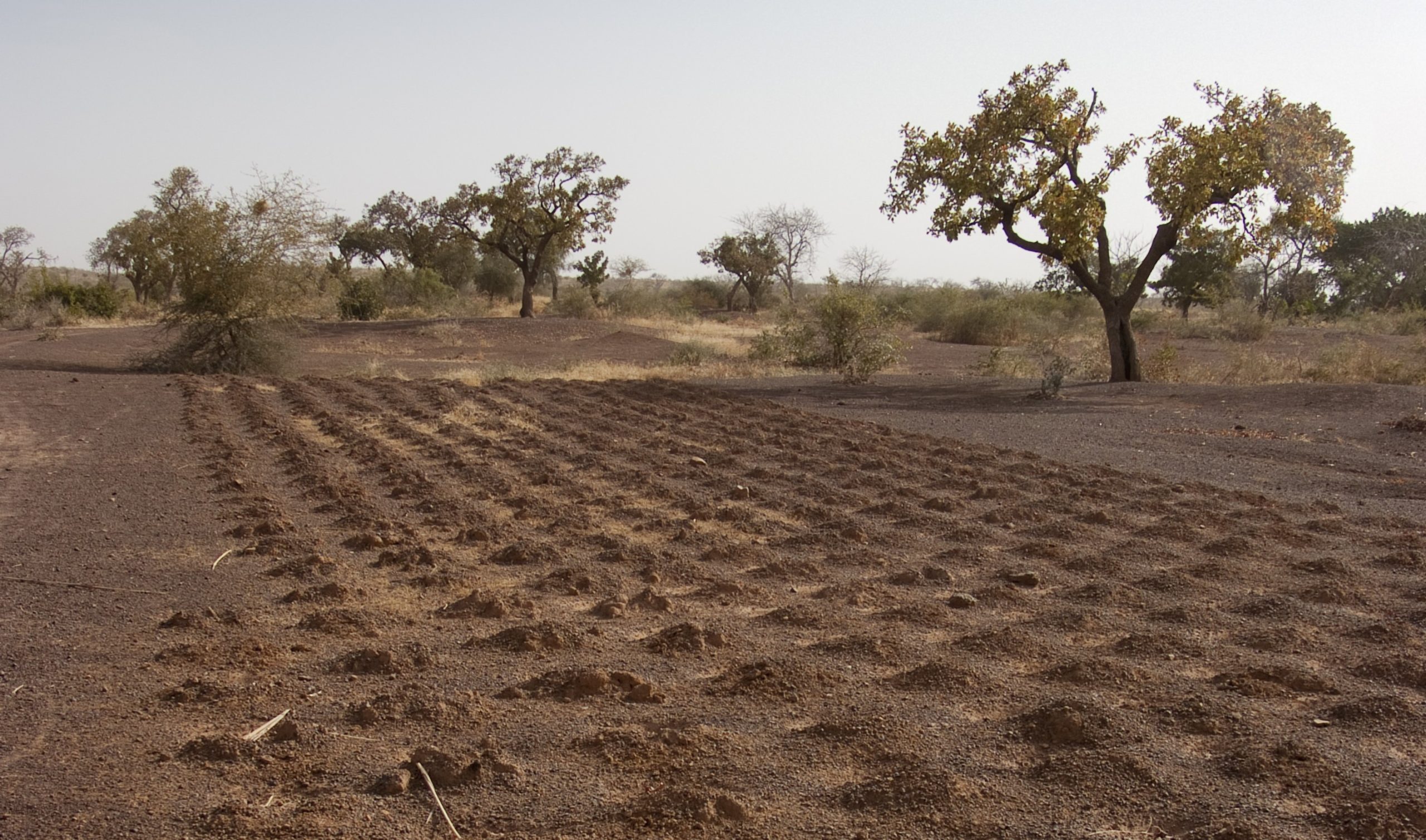
Humanitarian discourse often celebrates ‘resilience’, yet for many displaced people resilience is less a free choice and more a necessity imposed by crisis. That reality calls for policies that turn survival strategies into supported pathways for adaptation.
The Sahel has become a laboratory of overlapping crises. Armed conflict, chronic poverty and fragile institutions intersect with droughts, floods and desertification. According to recent estimates by UNHCR, around 3.8 million people were forcibly displaced across the central Sahel in 2024, including nearly 2.1 million internally displaced people in Burkina Faso, around 412,000 in Niger and 361,000 in Mali.
These figures have reshaped local realities. In and around Kaya, Burkina Faso, humanitarian reporting has documented a dramatic rise in population linked to the arrival of displaced people, placing extraordinary pressure on housing, schools and water services. In some schools, a single teacher reportedly supports up to 120 students, illustrating the strain on public services. Climate shocks deepen these fragilities. Flooding in Niger has repeatedly affected hundreds of thousands of people in recent years, according to ACAPS, displacing families already uprooted by conflict and forcing many to move again. Each year, land degradation and water scarcity continue to push new communities to migrate.
Changes in the climate therefore act not in isolation but as a risk multiplier, narrowing the space for choices among already vulnerable families. As one displaced farmer in central Mali put it: “I did not flee the drought alone, but because it destroyed my fields already threatened by insecurity.”
Local resilience: ingenuity under constraint
Despite extreme conditions, displaced people across the Sahel demonstrate remarkable adaptation strategies. Yet these choices are often dictated by survival rather than freedom.
In Kaya, solidarity has been essential. Host families have welcomed displaced people into their homes and shared their farmland. This generosity has saved lives but it is increasingly fragile. Water points are overcrowded, harvests insufficient and schools overwhelmed. What begins as solidarity gradually becomes a source of tension.
In Mopti, Mali, many displaced families continue to practise circular mobility, returning to their villages to cultivate small plots of 0.25 to 0.5 hectares before retreating again to urban centres for relative safety from armed violence. This practice is an age-old adaptation strategy. However, humanitarian reporting from central Mali shows that insecurity along rural roads in Mopti has made this form of mobility increasingly precarious, often forcing families to interrupt seasonal movements. What was once resilience has become a constant gamble.
In Tillabéri, Niger, displaced women have formed cooperatives to produce soap and process shea butter, generating modest but important income through small-scale local trade, as documented in programming supported by the International Organization for Migration. Some cooperatives have reported generating shared monthly revenues of roughly USD165 to 250, with individual members earning smaller amounts that help cover food, school fees or other household needs. These earnings can restore dignity and provide a measure of autonomy. Yet without reliable access to finance and broader commercial markets, such initiatives often remain limited to supporting survival.
In Diffa, Niger, displaced communities apply the traditional zaï technique to capture rainwater and restore degraded soils. According to research on dryland agriculture, this practice has been shown to significantly improve soil fertility and agricultural yields in arid environments. Rooted in indigenous knowledge, such practices could enrich adaptation programmes, yet they remain largely overlooked in official responses.
These stories highlight a truth: resilience exists, but it is under constraint. Every innovation hides a dilemma: whether to stay or to leave, to share or to starve, to risk or to renounce.
When resilience becomes an obligation
In policy and humanitarian discourse, ‘resilience’ is everywhere. The word reassures, but it can also mask a harder reality: that of forced choices. Mobility, historically the main adaptation tool in the Sahel, is increasingly restricted. Security policies treat it as a threat, depriving displaced people of their most effective means of survival.
In Burkina Faso and Niger, displaced people are rarely consulted systematically in the design or implementation of climate adaptation and displacement responses; in other parts of the Sahel they are often even less visible in adaptation planning. Their priorities, typically focused on access to land, water and education, are rarely reflected in policies affecting displaced populations. This inclusion matters both before displacement, to shape adaptation options that may reduce forced movement, and after displacement, in decisions affecting protection and recovery.
Towards a chosen and supported resilience
If resilience is to have real meaning, it must be supported rather than imposed. Policymakers, humanitarian and development actors, donors, and local institutions should consider the following actions and approaches:
- Policies should first recognise mobility as a legitimate form of adaptation, not a threat to be controlled.
- Local initiatives, including displaced people’s cooperatives and community associations, need direct financial and institutional support.
- Displaced voices must be included in national and regional decision-making on climate and migration.
- Greater investment in basic services such as health, education, and water is also essential to reduce tensions between hosts and displaced populations.
- Finally, indigenous knowledge, such as soil restoration and water conservation techniques, should be valued and combined with context-appropriate innovations rather than sidelined.
In the Sahel, resilience is real, but it is too often constrained. Displaced people innovate, negotiate, and create solutions, yet their room for manoeuvre is shrinking under the weight of insecurity, poverty and restrictive policies. Resilience can only be meaningful if it is accompanied by inclusive governance, institutional support, and recognition of local initiatives. Without this, resilience risks becoming an empty word, masking the harsh reality of forced adaptation among men and women trapped by overlapping crises.
Habmo Birwe
Former Research Fellow, World Bank Africa (FCV Unit, Sahel Region)
birwehabmo@gmail.com
X: @birwehabmo