
- April 2026
Bangladesh’s Loss and Damage framework aims to establish an enabling policy environment and the necessary institutional arrangements for mobilising funds to support people displaced by climate change impacts. Ensuring grassroots access to these funds is key to enabling tangible local actions that strengthen livelihoods and resilience.
If the impacts of climate change exceed displaced people’s ability to restore their livelihoods, how can they manage the risks and uncertainties? This is the reality in Bangladesh, where extreme weather events – particularly intensified floods and cyclones and their residual impacts – intersect with prolonged vulnerability to create the conditions for recurrent displacement. The devastating floods and cyclones of 2024 left thousands of displaced people to shoulder the burden of rebuilding homes and restarting income-generating activities largely on their own, with little financial support. Where support is provided, it is often short-term for emergency relief and fails to respond to specific local needs.
In this context, financing long-term, locally relevant responses is a prerequisite for supporting the livelihoods and building the resilience of displaced people. Without it, displaced populations are often forced into unsustainable livelihoods or unplanned migration, even in some cases falling victim to human trafficking.
The Fund for responding to Loss and Damage (FRLD), established under the United Nations Framework Convention on Climate Change (UNFCCC) and operationalised at COP 28 in 2023, has significant yet so far unrealised potential to mobilise finance for addressing the devastating consequences of climate change. Estimates indicate that USD 400 billion will be required annually to address losses and damages globally, while the Barbados Implementation Modalities (BIM), the start-up phase of the fund, has resources of just USD 250 million.[1] The BIM announced its first call for project applications (ranging between USD 5 and 20 million) at COP 30, providing due focus on strengthening nations’ policy and institutional capacity for mobilising loss and damage (L&D) funds for priority issues, including displacement. In response, Bangladesh, which has played a leading role in global L&D negotiations, is currently developing its own national L&D framework to mobilise and manage this fund. This article underlines why and how the national framework should ensure accessibility of the fund to grassroots actors.
Displacement in Bangladesh’s L&D framework
The operationalisation of the FRLD prompted the Government of Bangladesh to initiate the development of a national L&D framework.[2] Led by the Ministry of Environment, Forest and Climate Change, and technically steered by the Department of Environment and the Centre for Environmental and Geographic Information Services, the framework recognises internal displacement as a key manifestation of L&D. This builds on existing national policy, which recognises “climate-induced displacement” as a grave challenge to the “entitlements and rights” of the people and communities affected and acknowledges that access to assistance is uneven.[3]
In early 2025, the Ministry and Bangladeshi non-governmental actors convened an inception meeting to present a roadmap and to consult with national experts. Planned tasks include a national-level assessment of climate risks and vulnerabilities, the development of an operational definition of L&D tailored to the Bangladesh context and the design of a conceptual model for assessing, monitoring and reporting. In line with this, they proposed qualitative and quantitative studies to capture the barriers displaced people face in securing livelihoods amid the impacts of climate change. Consequently, the national framework is expected to clarify how the L&D fund can reach those most affected, including displaced people, to ensure the recovery of their livelihoods and enable future resilience.
Though the development of Bangladesh’s L&D framework is primarily government-led, it follows consistent calls by civil society for its creation. Local researchers and practitioners have long advocated for a national L&D framework aligned with existing institutions for humanitarian aid and disaster risk reduction while also addressing the persistent gaps within policy and practice.[4] Civil society voices will continue to be crucial in the current phase of drafting the national framework to ensure it effectively responds to losses and damages. The recent call for L&D funding proposals at COP 30 under the BIM underscores the timeliness of civil society efforts to ensure the operationalisation of the fund in Bangladesh.
Civil society demands for grassroots accessibility
The purpose of developing the national framework is not merely to create an extra policy instrument, but to ensure that it serves to make international financial resources accessible to those who need them most. On this subject, a decision by the UNFCCC meeting in 2024 underscores the importance of reducing “barriers to access to climate finance”. This notion was also reflected during a meeting organised by the L&D fund’s executive board, which called for “better access” to funding to ensure locally led actions.[5] However, accessibility is particularly challenging at the grassroots level, where the prominence given to the knowledge and technologies of external actors creates administrative hurdles that constrain local actors from applying for and obtaining resources on their terms. For instance, funding applications require organisations to be able to attribute impacts to climate change, validate claims through peer-reviewed research and conduct comprehensive environmental and social impact assessments, which collectively create significant barriers for grassroots actors seeking climate funding.
Grassroots accessibility can be understood in two ways: grassroots actors’ entitlement to claim financial resources; and their rights to participate in the funding process, from allocation to monitoring. Entitlement and rights are inseparable; together they determine grassroots accessibility to the L&D fund, making sure that financial resources reflect the interests and priorities of displaced people and those most affected. Funding accessed through the national L&D framework could enable displaced people and local civil society actors to address both the economic and the non-economic consequences of displacement. Displaced people could restore their destabilised livelihoods and continue to pursue lives they value through a variety of options, from post-disaster compensation for lost assets to community-based planned relocations that accord with their own choices. An accessible fund could also support locally led anticipatory actions or be integrated with social safety net programmes to respond effectively to the needs of displaced people across diverse local and displacement contexts.
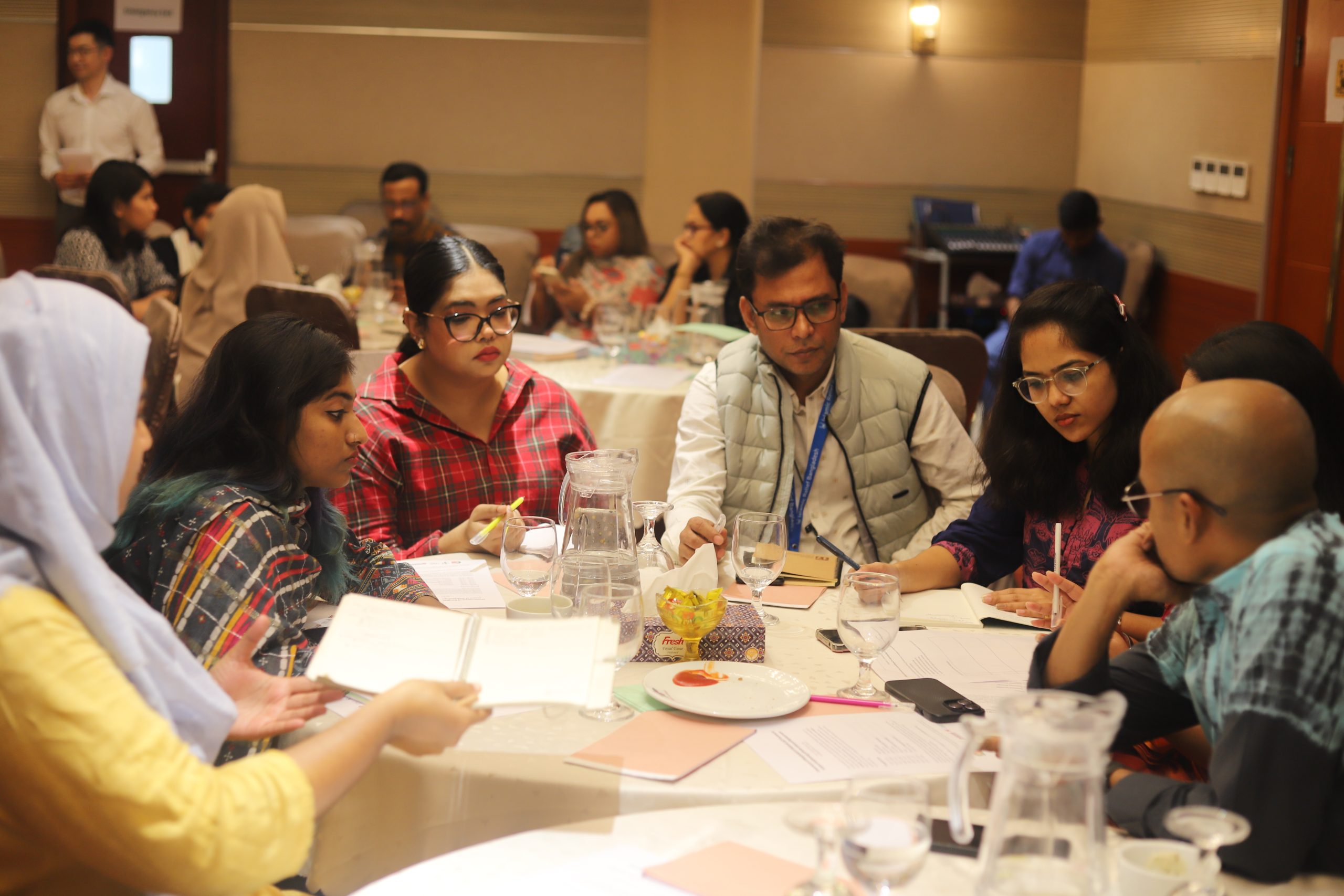
How can a national L&D framework institutionalise grassroots accessibility? Answers to this question should come from actors in Bangladesh, who are best-placed to know the limitations and opportunities of climate finance on the ground. This idea encouraged the authors to co-organise a workshop on 22nd February 2025 in Dhaka at which 35 key actors from NGOs, civil society organisations (CSOs) and research institutes jointly reflected on the Bangladesh framework. The insights shared in the workshop suggest three inter-related recommendations for achieving grassroots accessibility:
First, establish a clear coordination structure which respects the entitlement of grassroots actors to funding resources. The State’s central role in coordinating the L&D fund is imperative, not only to ensure the channelling of financial resources from the FRLD into the country but also to ensure their effective allocation through the coherent engagement of relevant ministries, local government bodies and non-governmental actors. Bangladeshi civil society has consistently called for the establishment of a national coordination mechanism that can govern the L&D fund in collaboration with diverse local actors and affected communities.[6]
Inter-ministerial coordination is essential for translating the commitment to grassroots accessibility into practice, as climate-induced losses and damages cut across multiple sectors, including housing, land, finance and disaster management. For example, tenure insecurity is a key challenge for displaced populations who lack legal protection and certainty over housing and land rights; yet addressing it demands joint efforts between ministries that currently operate in fragmented bureaucratic silos. Integrated financing across government bodies under the L&D framework could enhance the fund’s reach by aligning with existing government initiatives – such as housing programmes and social safety nets – already administered by relevant ministries. This alignment would reduce duplication, improve targeting and ensure the integrated delivery of support.
The national framework should clearly define the roles of each ministry, designate implementation agencies at both national and local levels and establish inter-ministerial monitoring to track progress. At the same time, reinforcing the role of local governments at both the district and sub-district level is vital in order to close the implementation gaps seen under previous centralised climate finance architecture. This includes equipping local authorities with a solid understanding of L&D, granting them decision-making power in fund allocation and enabling them to identify needs and design tailored solutions. Public–private partnerships can further strengthen sub-national leadership by mobilising private sector capital and technology for local implementation.
Second, ensure an inclusive local institutional mechanism to secure the rights of grassroots actors to claim from the L&D fund. Procedural simplification of the claim process is key to lowering barriers to climate fund access so that grassroots actors can submit proposals without relying on distant intermediaries. Current climate finance mechanisms, such as the Green Climate Fund, have been criticised for long approval timelines, technical jargon and procedural complexity.[7] The L&D framework should lower these barriers, transforming the bureaucratic nature of climate finance into an inclusive system that enables diverse local actors to claim, access and utilise funds for a plurality of preparedness and response options. The CSOs argued for the establishment of a dedicated funding modality for frontline civil society actors that would allow direct application for and receipt of urgent small-scale funding, bypassing bureaucratic hurdles and institutional hierarchies.
One feasible way to enhance direct participation of grassroots actors is to institutionalise a user-friendly and transparent data system for assessing displacement and other forms of L&D. Weak national data systems limit grassroots actors’ ability to substantiate claims with evidence, particularly for non-economic losses and damages that are often excluded from existing databases. Establishing a localised institutional mechanism for assessing displacement and other losses with clear protocols for input from local researchers, CSOs and community representatives would enrich the data and strengthen its policy relevance.
Through the direct participation of grassroots actors, locally-led responses can be financially strengthened, enabling displaced people to drive climate actions that expand livelihood options on their own terms. A national L&D framework which offers a favourable institutional environment for grassroots actors can support them to develop proposals and secure small-scale funding – in contrast to the predominantly top-down climate, development and humanitarian finance system that is often poorly aligned with community realities.
Third, incorporate Measuring, Reporting and Verifying (MRV) procedures to safeguard the entitlements and rights of grassroots actors. MRV is a mechanism to continuously monitor actions, effects, constraints and needs to inform governance of the L&D fund in a way that guarantees the entitlements and rights of grassroots actors. MRV should go beyond institutional self-reporting to actively involve grassroots actors in monitoring resource use, assessing effectiveness and evaluating outcomes. This inclusion would not only strengthen transparency but also ensure lived experiences are used to improve fund utilisation. For instance, in Bangladesh, parliamentary standing committees monitor the implementation of development projects and provide feedback to the respective ministries. At the local level, standing committees include elected representatives, civil society actors, women and young people who participate in planning, budgeting and monitoring local development initiatives. Such institutional mechanisms could inform the design of MRV procedures within the national L&D framework.
Effective MRV demands robust communication channels between government bodies, NGOs, CSOs, and grassroots networks. Youth organisations, whose members often witness climate impacts and provide voluntary humanitarian responses to affected communities, should have an institutionalised role in these processes, with their observations feeding into formal reporting cycles. A reliable and accessible complaint mechanism is needed to challenge misuse or misdirection of funds. Thus, the L&D framework should not simply deliver financial resources, but also financial transparency.
Embedding grassroots participation into MRV is critical in Bangladesh, where local governance often operates through entrenched power asymmetries that tend to benefit social elites rather than the displaced or those most in need. Accountability mechanisms promoted by NGOs largely remain ineffective, as exclusive and hierarchical structures hamper reporting and complaints systems designed for affected people.[8] Meaningful participation of grassroots actors in L&D finance through MRV cannot be achieved through simple procedural fixes. Formalising anonymous grievance mechanisms and CSO-facilitated monitoring committees can be considered as a way to centre displaced people and their advocates, safeguarding accountable fund utilisation. This would help ensure displaced people are no longer passive recipients of financial support but entitled participants, creating greater choices for the restoration and advancement of their lives and livelihoods.
Moving forwards
Bangladesh’s emerging L&D framework has the potential to help those most affected, particularly displaced people, to pursue their preferred livelihoods and build resilience. Realising its potential demands coordinated state leadership and inclusive mechanisms at local level that allow displaced people and local organisations to access financial resources and participate in the funding process. The meaningful engagement of grassroots actors in monitoring, reporting and verifying how funds are used is also essential for grassroots accessibility.
Together, these measures can enable displaced people and their grassroots advocates to exercise agency in shaping their recovery, rather than being constrained by externally imposed solutions. If realised, Bangladesh’s framework could provide a model for climate-displacement finance that takes displacement response to a new level of inclusiveness and climate justice.
Hyeonggeun Ji
PhD Researcher, International Institute of Social Studies (ISS), The Netherlands
ji@iss.nl
linkedin.com/in/hyeonggeun-ji
Md Shamsuddoha
Chief Executive, Center for Participatory Research and Development (CPRD), Bangladesh
doha@cprdbd.org
linkedin.com/in/mdshamsuddoha
The authors would like to thank participants of the workshop Climate Justice Alliance-Bangladesh and financial support from the European Research Council for the Humanitarian Governance research project (grant agreement No 884139).
[1] Shawoo Z, Ghosh E and Nazareth A (2025) Implementing innovative finance instruments for loss and damage, Stockholm Environment Institute
[2] UNFCCC (2023) Operationalization of the new funding arrangements for responding to loss and damage and the fund established in paragraph 3 of decisions 2/CP.27 and 2/CMA.4
[3] Government of Bangladesh (2021) National Strategy on Internal Displacement Management
[4] Haque M, Pervin M, Sultana S and Huq S (2019) ‘Towards Establishing a National Mechanism to Address Losses and Damages: A Case Study from Bangladesh’ in Mechler R, et al (eds) Loss and Damage from Climate Change: Concepts, Methods and Policy Options, Springer Nature
[5] FRLD (2025) Report of the Board to the Conference of the Parties at its thirtieth session and the Conference of the Parties serving the meeting of the Parties to the Paris Agreement in its seventh session, FRLD/B.6/4
[6] Shamsuddoha M, et al (2024) 29th Conference of the Parties: Articulating CSOs Position Together
[7] Omukuti J, Barrett S, White P, Marchant R and Averchenkova A (2022) ‘The green climate fund and its shortcomings in local delivery of adaptation finance’, Climate Policy, Vol 22: 1225-1240
[8] Ji H (2025) ‘Inter-community participatory social network analysis: Re-envisioning humanitarian accountability with climate-related displaced communities in Bangladesh’, Disaster Prevention and Management, Vol 34 (1): 133-146
READ THE FULL ISSUE