
- October 2026
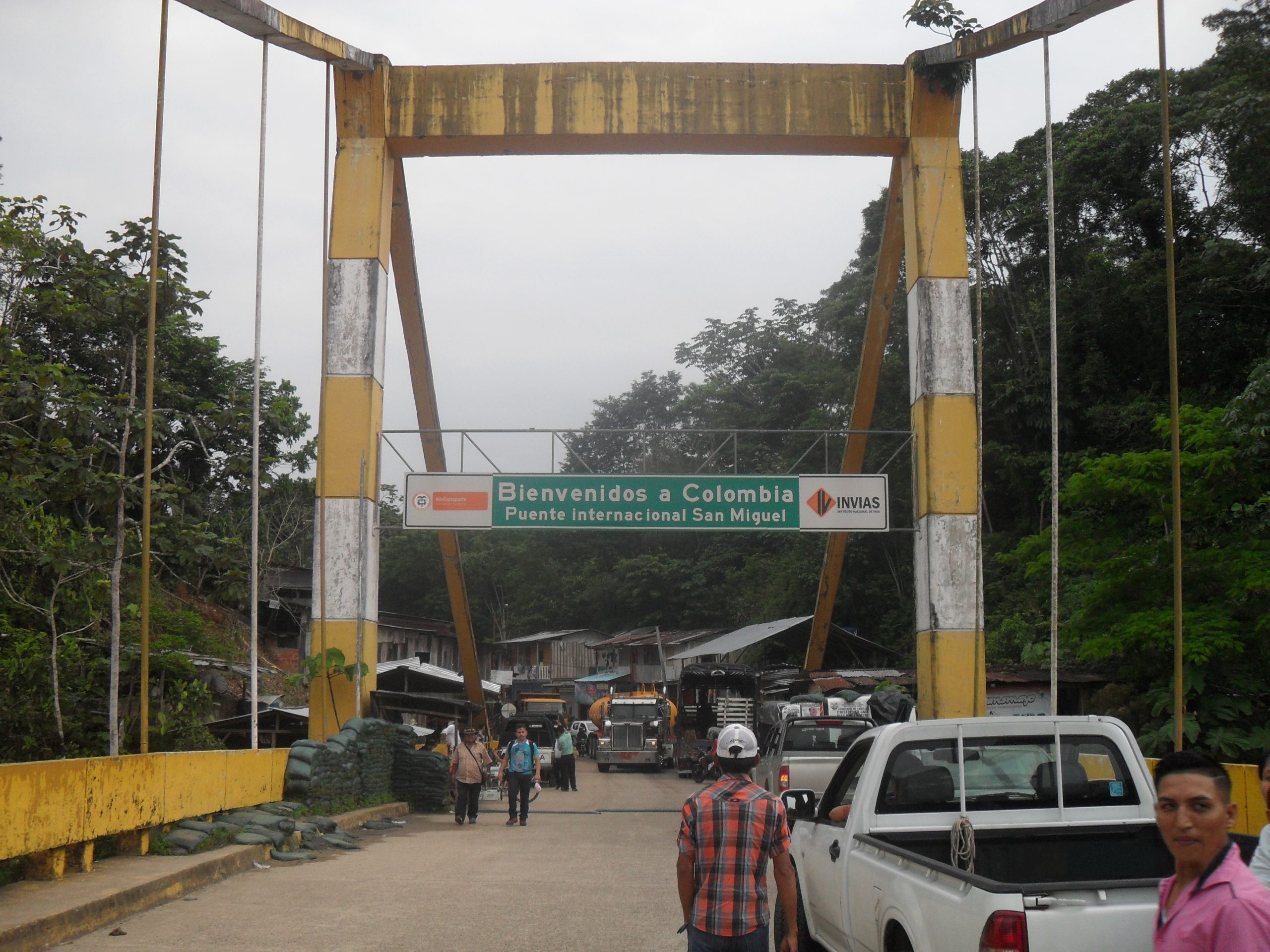
Emerging commitments, together with existing international and regional refugee and human rights law, give States in Latin America and the Caribbean both the mandate and the momentum to protect people displaced across borders by climate change and disasters. The challenge is to translate this into consistent practice.
Disasters trigger millions of new displacements throughout the Americas each year, reaching a record high of over 13 million in 2024 alone.[1] While most of this displacement is internal, some people are also forced to cross borders in search of safety. A growing body of law and policy is emerging in response to these challenges.
Growing recognition and commitments
At the regional level, States across Latin America and the Caribbean have collectively acknowledged climate- and disaster-related displacement and pledged action, in tandem with international processes such as the Nansen Initiative Protection Agenda and the Sendai Framework for Disaster Risk Reduction. The 2014 Brazil Declaration and Plan of Action, endorsed by more than 30 countries in the region, recognised the mounting challenges and called for integrated legal, policy and practical responses to protect affected populations.
In the years that followed, two regional intergovernmental consultation processes adopted policy guidance to improve coordination on cross-border displacement triggered by disasters. Regional governments also commissioned a comprehensive study to inform policy reform and strengthen national frameworks to address this form of displacement more effectively.[2]
These developments paved the way for two milestones. First, the Cartagena +40 process, a State-led commemoration of the 40th anniversary of the 1984 Cartagena Declaration on Refugees in Latin America and the Caribbean, made climate- and disaster-related displacement a central pillar, culminating in the Chile Declaration and the 2024-2034 Plan of Action (CDPA). The CDPA provides a regional blueprint for addressing climate- and disaster-related displacement over the next decade.
Second, in July 2025 the Inter-American Court of Human Rights issued its Advisory Opinion on the Climate Emergency and Human Rights (AO-32/25). This capped a two-and-a-half-year process, the most participatory in the Court’s history. The Court received a record number of written observations and held public hearings in Barbados and Brazil. The request put to the Court explicitly asked how States’ human rights obligations apply to human mobility in the context of climate change, and at least 29 of the more than 200 written observations addressed that question directly.[3]
Together, these two milestones reinforce recognition of climate- and disaster-related displacement as a regional protection priority. Below, each is considered in turn, highlighting opportunities, gaps and the practical guidance still needed to move from commitment to practice.
Chile Declaration: opportunities and challenges
The CDPA is the most detailed regional commitment to date on climate- and disaster-related displacement. Although it is not legally binding, it includes provisions directly relevant to people displaced across borders in these contexts. It reaffirms the principle of non-refoulement (no return to places where life or freedom would be at risk). It also calls for access to asylum or, where that is not available, to complementary[4] or humanitarian protection for people whose needs stem from climate- or disaster-related harm.[5]
The CDPA also sets the stage for enhanced capacity-building across national protection systems, border management agencies, and host communities. In addition, it promotes stronger inter-State cooperation, closer collaboration among diverse stakeholders and alignment with existing regional and global frameworks, including the Global Compact on Refugees. Its endorsement by 22 Latin American and the Caribbean States signals a degree of political buy-in and regional solidarity that could enable coordinated responses and shared responsibility. To complement the formal, State-led oversight mechanism, the CDPA invites civil society, academia, and refugee-led organisations to autonomously track implementation, creating a formal entry point on paper to bring grassroots evidence and independent recommendations for States to consider in the framework’s future biennial reviews.
At the same time, the CDPA’s language is cautious and leaves important gaps. While invoking access to asylum and complementary protection in cases of climate- and disaster-related displacement, it avoids stating clearly that existing international and regional refugee and human rights protection frameworks apply. It presents UNHCR’s 2020 Legal considerations regarding claims for international protection made in the context of the adverse effects of climate change and disasters as guidance States can consider on a “voluntary basis” rather than as an authoritative interpretation of binding legal obligations. This reflects a reluctance among States to employ the tools they already have at their disposal, perhaps due to fear of political backlash in a context where the region’s chronically underfunded asylum systems already struggle to offer meaningful protection. As a result, there is a risk not only of uneven implementation but of weaker protection for people displaced in practice.
Most strikingly, the CDPA does not reaffirm the relevance of the Cartagena Declaration’s expanded refugee definition, which extends protection to persons fleeing generalized violence, foreign aggression, internal conflicts, massive violation of human rights, or other circumstances which have seriously disturbed public order. That omission is significant not only because the Cartagena Declaration is a cornerstone of the region’s protection tradition and its expanded definition has been incorporated into the legal frameworks of 16 Latin American countries, but also because of growing recognition that elements of its definition can help protect some people displaced across borders by climate change and disasters.[6] By omitting references to Cartagena’s refugee definition, States missed an opportunity to anchor regional commitments more firmly in existing law.
Inter-American Court: legal grounding and protection gaps
In this rapidly evolving legal and political landscape, the Inter-American Court’s Advisory Opinion 32/25 provided much needed grounding.[7] Although not formally binding, it provides an authoritative interpretation of States’ obligations that carries significant weight. While countries like the United States, Canada, and most Caribbean nations do not recognize the jurisdiction of the Court, the opinion went as far as stressing that its interpretation should guide all members of the Organization of American States and not just those that have ratified the American Convention on Human Rights (ACHR).
Substantively, the Court affirmed that climate change has reached the level of a ‘climate emergency’, framing this as a legal reality with direct implications for State responsibility. It established nature as a rights-holder, affirmed the human right to a healthy climate as part of the broader right to a healthy environment, and confirmed that this right applies to present and future generations. Crucially, the Court required States to act with heightened care and urgency to prevent and respond to climate-related harm, a standard it called “enhanced due diligence”.
Beyond these broad principles, the opinion offered the most wide-ranging judicial treatment so far of climate- and disaster-related mobility. The Court conceived of ‘climate mobility’ broadly, encompassing displacement linked to sudden- or slow-onset events, planned relocation, internal displacement and situations where environmental stress fuels violence or social unrest. It recognised that such mobility could be internal or cross-border. Just as importantly, the opinion acknowledged climate immobility, where people were unable to move away from areas exposed to climate risks, and treated this as a human rights concern.
The Court noted that climate impacts could threaten health, undermine food and water security, disrupt livelihoods and contribute to instability and insecurity, thereby eroding the enjoyment of human rights. Its framework sets out substantive and procedural obligations, together with special duties towards vulnerable populations. These obligations also apply in the context of mobility and require States to uphold the same standards when responding to displacement.
The Court also placed cooperation and responsibility-sharing at the centre of regional and global responses. States are expected to coordinate to manage mobility in a safe, orderly and regular way. It stressed that an effective response to climate mobility requires adequate resources, affirming the duty of the international community to establish funding mechanisms based on equity, solidarity and common but differentiated responsibilities to support States, particularly those most affected by climate impacts and climate-related mobility.
On cross-border mobility, the opinion made several significant contributions. The Court affirmed that individuals displaced across borders in the context of climate impacts are entitled to international protection and safeguards against refoulement. To fulfill this obligation, it called on States to establish migration and protection pathways, including humanitarian visas, temporary residence permits, or access to refugee status or complementary mechanisms. However, the Court did not clarify how specific legal criteria, such as that of the Refugee Convention or the Cartagena Declaration, apply in these circumstances.
Taken as a whole, AO-32/25 and the Inter-American Commission’s 2024 Resolution on Climate-Induced Human Mobility illustrate the role of the Inter-American Human Rights System in shaping regional responses. Where the Court was cautious, the Commission went further, explicitly affirming Cartagena as a basis for protection in the context of climate- and disaster-related displacement. Together, the two bodies highlight both the ambition and the restraint that characterise the system’s emerging approach to climate-related mobility.
Turning commitments into action: a Practical Toolkit
Regional commitments under the CDPA, alongside the landmark advisory opinions of the Inter-American Court and the International Court of Justice in 2025, reinforce that international protection obligations apply in the context of climate- and disaster-related displacement. Like the Inter-American Court, the ICJ confirmed that sending people back to situations of life-threatening climate harm could breach the prohibition on refoulement, aligning with the UN Human Rights Committee’s finding that such returns can violate obligations under the International Covenant on Civil and Political Rights (ICCPR).
However, neither Court gave clear guidance on how to apply the principle in practice, opening the doors to uncertainty for States and domestic authorities.[8] In the absence of detailed judicial guidance, practical resources aimed at practitioners and decision-makers become essential. One such resource is a Toolkit prepared by this author with other scholars, which draws on a growing body of case law to show how existing refugee and human rights standards can be applied to people displaced across borders by the impacts of climate change and disasters.[9]
The Toolkit dispels persistent myths about the limits of existing international protection frameworks through five key considerations. First, it clarifies that standard legal criteria apply to climate-related claims without exceptional rules or presumptions of eligibility or ineligibility. Second, it demonstrates the need to evaluate an applicant’s cumulative ‘hazard-scape’ rather than isolating a single climatic event, capturing how environmental factors interact with social, economic, and political drivers.
Third, it adopts an intersectional approach, accounting for how differentiated vulnerabilities based on gender, age, and pre-existing marginalisation shape individual risk. Fourth, the Toolkit emphasises that while hazards may be natural, the severity of a disaster and resulting harm often stems from State action or omission across prevention, response, and recovery, meaning human agency is a central cause of protection-engaging harms. Finally, it highlights that risk is forward-looking and manifests over time, showing that while effective State adaptation can reduce risk below protection thresholds, a failure to address foreseeable harms can establish or heighten the need for international protection.
Beyond these fundamental considerations, the Toolkit analyses the applicability of the 1951 Refugee Convention, the ICCPR, the Convention against Torture, and regional instruments across Africa, the Americas, and Europe. For the Americas specifically, it illustrates how two grounds of the Cartagena Declaration’s expanded definition, ‘circumstances which have seriously disturbed public order’ and ‘massive violation of human rights’, can encompass climate and disaster impacts. It further details the robust non-refoulement standard under the ACHR, which requires complementary protection whenever individuals face a real and foreseeable risk to life, physical integrity, or freedom, including from severe environmental degradation and resource scarcity.
To expand its reach across jurisdictions, the Toolkit is available in multiple languages and formats. It comprises the full Practical Toolkit, a concise Overview designed for quick reference, and training materials featuring a video explainer and scenario-based exercises.[10] While global in scope, covering international frameworks as well as regional bodies of law, it is also intended to guide the development of domestic versions. In fact, the Toolkit was inspired by earlier guidance developed for the United States,[11] while versions for Australia and the United Kingdom were recently published,[12] and an additional adaptation is underway in Canada. Because it can be adapted to any domestic legal framework, the Toolkit offers a practical way to advance regional priorities, including the CDPA Biennial Plan of Action’s commitment to improving the technical capacities of officials involved in border management and protection.[13]
When read together with the Chile Declaration, the Commission’s resolution and the Court’s Advisory Opinion, the Toolkit demonstrates that despite uneven legal frameworks and resource constraints, States are neither without obligations nor without the tools to act. While prevention, adaptation and durable solutions remain vital, international protection should serve as a central pillar of the regional response.
Moving forward
Looking ahead, the challenge is to translate this growing body of law and policy into consistent practice. Civil society and academia can reinforce this process by monitoring how States respond to climate-related displacement, producing context-specific analysis and fostering regional dialogue. They can also support implementation by developing domestic adaptations of the Practical Toolkit to guide decision-makers and policymakers in their own contexts. If the region succeeded in aligning political commitments, standards from the Inter-American system, and such practical guidance, it could not only strengthen protection at home but also provide a model of rights-based leadership for other regions grappling with the same challenge.
Felipe Navarro
Associate Director, Policy & Advocacy, Center for Gender & Refugee Studies, University of California College of the Law, San Francisco
navarrofelipe@uclawsf.edu
linkedIn/in/fnlux
[1] Internal Displacement Monitoring Centre (2025) Global Report on Internal Displacement
[2] See Nansen Initiative (2016) Protection for Persons Moving Across Borders in the Context of Disasters: A Guide to Effective Practices for RCM Member Countries; South American Conference on Migration (2018) Regional Guidelines on the Protection and Assistance of Cross-border Displaced Persons and Migrants in Countries Affected by Disasters; Cantor D (2018) Cross-Border Displacement, Climate Change and Disasters: Latin America and the Caribbean, UNHCR and Platform on Disaster Displacement
[3] Navarro F (2024) ‘How the Inter-American Court Could Advance Protection for Climate-Displaced Individuals’, Just Security
[4] ‘[C]omplementary protection refers to a status in domestic law that is granted to individuals who have been determined not to be refugees under the Refugee Convention, but who nevertheless have an international protection need based on the principle of non-refoulement.’ McAdam J (2021) ‘Complementary Protection’ in Costello C, Foster M and McAdam J (eds) The Oxford Handbook of International Refugee Law, p 662.
[5] See Center for Gender & Refugee Studies (CGRS) (2025) The Chile Declaration and Plan of Action 2024–2034: A Blueprint for Addressing Climate and Disaster-Related Displacement in the Americas
[6] UNHCR (2020) Legal considerations regarding claims for international protection made in the context of the adverse effects of climate change and disasters
[7] See Navarro F (2026) ‘The Inter-American Court of Human Rights’ Advisory Opinion: From emerging practices to legal obligations on climate- and disaster-related displacement’, Nansen Initiative +10 Blog, Kaldor Centre Climate Mobility Hub; CGRS (2025) The IACtHR’s Advisory Opinion on the Climate Emergency: An Important Step for the Protection of Climate-Displaced Individuals
[8] McAdam J (2025) ‘How the ICJ’s Advisory Opinion on Climate Change Addresses Displacement, International Protection and Ongoing Statehood,’ Researching Internal Displacement
[9] Jastram K, McAdam J, Gilbert G, Wood T and Navarro F (2025) International Protection for People Displaced across Borders in the Context of Climate Change and Disasters: A Practical Toolkit. Center for Gender & Refugee Studies; Kaldor Centre for International Refugee Law; Essex Law School and Human Rights Centre.
[10] Kaldor Centre Climate Mobility Hub ‘Practical Toolkit on Climate Change and Disaster Displacement: Training Materials for Decision-Makers and Practitioners’
[11] See CGRS (2023) Analyzing Asylum Claims for Individuals Fleeing Climate Change, accessible upon request through this link.
[12] See Jane McAdam and Tamara Wood (2026) Australian Toolkit on International Protection in the context of Climate Change and Disasters, Kaldor Centre for International Refugee Law; Earth Refuge et al. (2026) UK Practice Toolkit: Climate, Disasters & Protection Claims
[13] Follow-up and Coordination Mechanism of the Chile Plan of Action (2025) Priorities for the 2025–2027 Biennium
READ THE FULL ISSUE