
- May 2026
The climate crisis exposes the limits of current legal frameworks. Imminent tipping point harms and new advances in science and litigation create an opportunity to strengthen protections for those most vulnerable to climate-induced displacement.
This article proposes that climate tipping points should be treated as legal ‘inflection points’ at which non-linear, abrupt and regionally specific threats to human security render existing legal protections inadequate. These conditions demand not only anticipatory policy responses but also the recognition of new legal responsibilities under international law. The recent 2025 International Court of Justice (ICJ) Advisory Opinion affirms that a State’s failure to take appropriate action on climate change may constitute a violation of international obligations emphasising that in cases where harms can be foreseen, the State has a duty to act.
Climate tipping points
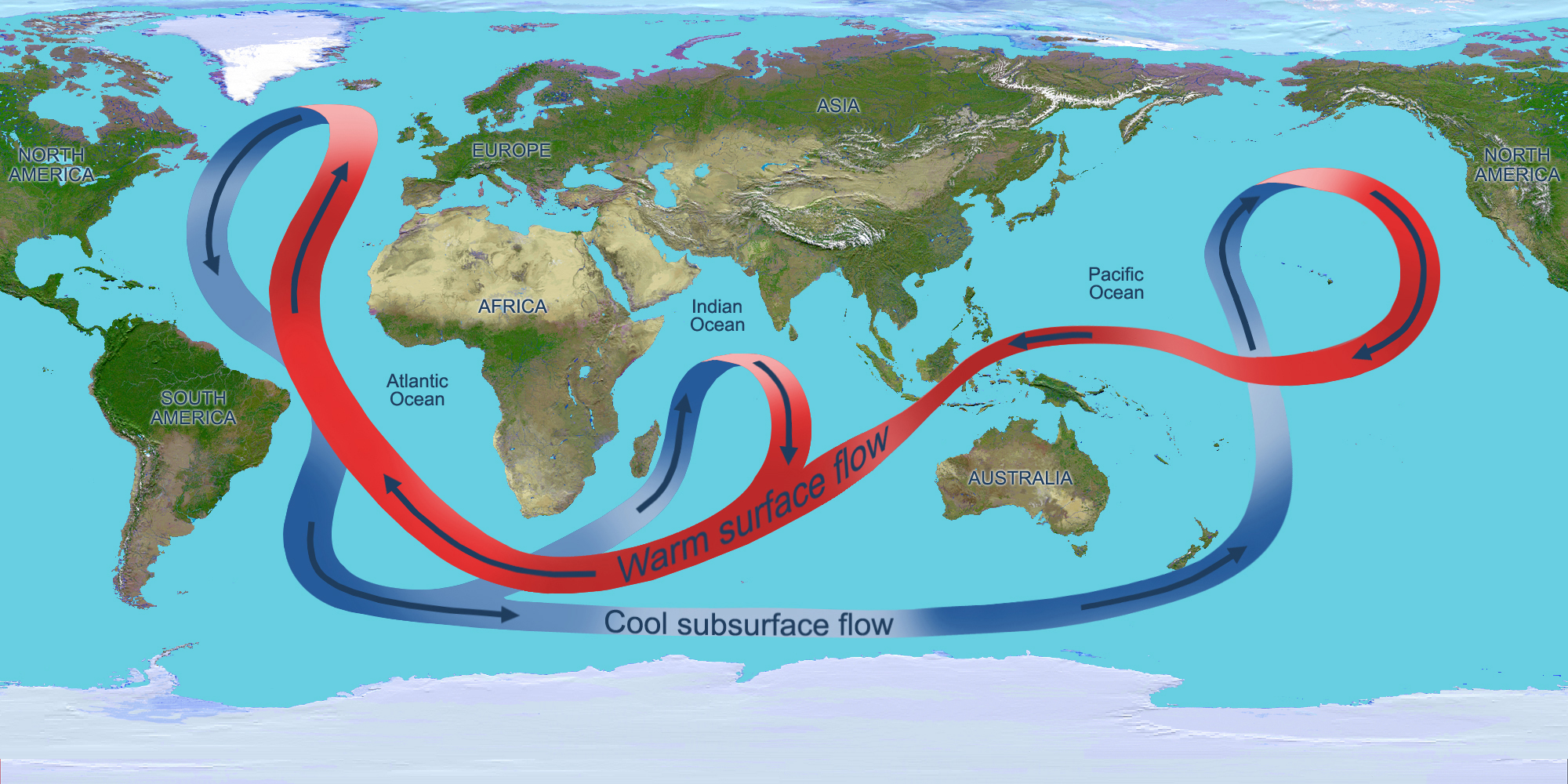
A climate ‘tipping point’ is a threshold where even small perturbations can irreversibly alter a system’s trajectory. Climate models now consistently show abrupt shifts in regional climate systems for global warming levels below 2°C. The Atlantic Meridional Overturning Circulation (AMOC), a key ocean circulation system, is particularly vulnerable. Its collapse would trigger abrupt shifts in global weather, and recent warnings suggest that even partial weakening could have catastrophic regional impacts. Recent analyses from the 2025 Global Tipping Points report confirm that, while a full AMOC shutdown remains unlikely before 2100, substantial AMOC weakening (by 20%–80%) is increasingly likely and is forecast to have impacts on rainfall regimes in West Africa and the Amazon.[1] The International Panel on Climate Change’s Sixth Assessment Report in 2021 confirmed that the risks of crossing tipping points were already moderate at ~1.1°C of warming, which the world has now surpassed. Under current policies, there is also a high probability of multiple tipping systems being triggered, leaving millions in Africa, South Asia and Latin America exposed.
New legal developments and attribution science
The 2025 ICJ Advisory Opinion offers a significant legal turning point in aligning scientific risk with legal accountability, and an evidentiary and legal foundation for lowering the threshold of proof in climate-related displacement cases. The Court affirmed that States’ failure to take timely and appropriate action to address climate change may constitute a violation of international law, even where direct harm has not yet materialised. The Court emphasised that the breach lies not in the emission of greenhouse gases per se, but in the failure to fulfil conventional and customary obligations to protect the climate system from significant harm.
This clarification strengthens the legal significance of attribution science, particularly its role in establishing foreseeability, the standard that defines when States must act.[2] The Court stated unequivocally that the higher the probability and severity of the anticipated harm, the more demanding the legal standard of conduct becomes. This encompasses forward-looking and cumulative risks, noting that even environmentally minor activities may amount to significant harm when evaluated in interaction with others.
The latest climate science on tipping points provides evidence for legal foreseeability, as it can show both the imminence of harm and its regional specificity. This represents a critical evolution in the interpretation of international legal obligations: it transforms foresight from a tool for policy planning into a standard of legal due diligence. For climate mobility, this means that the growing precision of climate science should no longer be treated as advisory, it must become actionable.
The availability of attribution models, early warning systems and displacement risk forecasting challenges the long-standing defence of ignorance. States and regional actors must now be held to what can be termed a Legal Duty of Anticipation: a legal obligation to identify, prepare for and respond to mobility risks before they crystallise into harm. Though not a formally codified doctrine, this emerges from existing international legal obligations, including the duty of due diligence in environmental law, the obligation to prevent foreseeable harm, and positive human rights obligations such as the duty to protect life under Article 6 of the International Covenant on Civil and Political Rights; this provides a rights-based framework for this transition to proactive, inclusive and dignity-centred legal protection.
We refer both to States’ obligations to prevent foreseeable climate-related displacement where possible, and to protect the rights, safety and dignity of persons displaced when prevention fails. The Advisory Opinion strengthens the legal basis for invoking State responsibility for climate-related displacement, particularly where scientific evidence, such as attribution studies or early warning signals of tipping point destabilisation, can demonstrate a causal chain between emissions, systemic breakdown and human harm. Emerging climate data and tipping point models can be used to substantiate legal claims and expand protection mechanisms for displaced populations. The Advisory Opinion strengthens the legal basis for these claims by clarifying States’ duties in relation to foreseeable climate harm; at the same time, advances in attribution and risk science make it easier to satisfy evidentiary requirements in particular cases. Climate disaster demands a new normative legal sphere that effectively lowers evidentiary thresholds for climate-displaced persons seeking protection across borders.
Law does not demand scientific certainty or system-wide collapse before obligations arise. Even partial weakening generates severe risks for food security, rainfall variability and displacement. Attribution science strengthens this legal argument by converting complex probabilities into evidence of foreseeability. Unlike science, which seeks high confidence, law can act on the ‘balance of probabilities’, particularly where the scale of potential harm is grave. More precise attribution evidence does not formally change legal tests, but it can make those tests easier to satisfy by strengthening proof of causation. Linking emissions to specific harms makes it easier for displaced populations to satisfy evidentiary thresholds and underscores the need for anticipatory legal protection.
Attribution and human rights
Attribution science plays a pivotal role not only in establishing foreseeability, but also in strengthening the normative and evidentiary basis for human rights protections in climate-related displacement. Where legal frameworks have traditionally required a proximate or direct link between cause and harm, attribution methodologies help overcome these obstacles by offering probabilistic, scientific narratives of causality.[3] This is especially important in the context of displacement driven by climate tipping points, where harm is cumulative and non-linear.
Legal norms protecting life, health and dignity, enshrined in the International Covenant on Civil and Political Rights, the European Convention on Human Rights and regional human rights regimes, are increasingly interpreted using evolving scientific knowledge. Legal norms protecting life, health and dignity, including the right to life in Article 6 of the International Covenant on Civil and Political Rights, and Article 2 of the European Convention on Human Rights, are increasingly interpreted in light of scientific knowledge. The right to life includes positive obligations on States to prevent foreseeable threats, including environmental degradation. Attribution science provides an evidentiary bridge between emissions and these rights violations.
The ICJ Advisory Opinion further affirms that legal responsibility does not require scientific certainty but is grounded in the probability and severity of harm. This means that early signs of AMOC weakening, prolonged droughts or extreme heatwaves linked to human-induced activity can trigger policy responses and legally enforceable duties.
The value of attribution in human rights-based climate mobility claims lies in its ability to support both preventative and retrospective legal action. For preventative claims, attribution bolsters anticipatory protection arguments: for example, where displacement is foreseeable due to AMOC-driven rainfall disruption or sea-level rise, and the State has failed to plan, relocate or mitigate harm. For retrospective claims, attribution may substantiate harm caused by State inaction, allowing displaced persons to challenge violations of rights to health, shelter or security.
This is especially relevant when interpreting displacement through the lens of ‘constructive refoulement,’ where failure to prevent foreseeable displacement or to provide safe migration alternatives may amount to a de facto expulsion into conditions that breach human rights law. In such cases, attribution science can serve as a key tool in demonstrating that governments had access to predictive data and failed to act. This reframes displacement not as an unavoidable act of nature but as a legally preventable human rights failure.
In this way, attribution science underpins the ‘duty of anticipation’, a forward-looking legal obligation to use existing knowledge and tools to prevent, prepare for, and respond to displacement threats. By embedding attribution methodologies into legal argumentation, climate mobility can be repositioned from a speculative humanitarian risk to a foreseeable, attributable, and rights-based harm.
New grounds for protections and accountability
Additional legal grounds are emerging to strengthen State accountability and expand international protection frameworks for displaced persons. In tort law, the duty of care hinges on demonstrating a causal link between an actor’s conduct and the harm suffered.[4] Yet, as Hinteregger[5] and Stuart-Smith[6] argue, climate litigation has long struggled with claimants’ difficulties in finding a sufficient causal link between climate change and harm. This is due to the diffuse nature of emissions, the geographic and temporal distance between emitter and harm and the involvement of multiple parties.
Tipping points increasingly have regional specificity, and abrupt, high-magnitude effects. Through attribution science, the threshold for fulfilling the ‘but-for’ test – that is, showing that the harm would not have occurred in the same way without the relevant conduct – and clarifying State negligence through inaction can be lowered. CarbonBrief analysis shows that in many cases, the evidence plaintiffs provided was not sufficient to overcome even the more flexible causation tests, such as ‘material contribution’ or ‘contribution to risk’ approaches, which allow courts to establish liability where multiple actors contribute to harm and where strict ‘but-for’ causation would otherwise be impossible to prove in complex climate systems.[7]
The right to life, as protected under international human rights law (including Article 6 of the ICCPR), alongside the principle of non-refoulement under Article 33 of the 1951 Refugee Convention, is particularly relevant in the context of cascading impacts from tipping points, such as loss of access to water, food and habitable environments. These threats undermine core human security and can no longer be dismissed as speculative. The immediacy and systemic risk posed by tipping points, supported by more probabilistic approaches, offer a compelling normative and evidentiary basis for invoking legal protections. While refugee status has traditionally required proof of persecution, broader definitions of harm, such as ‘generalised violence’ under the UNHCR and the Guiding Principles on Internal Displacement, provide alternative pathways for protection rooted in threats to life and dignity.
This normative shift also repositions climate displacement as a legal issue, rather than solely a humanitarian concern. The application of the concept of ‘generalised harm’ opens new opportunities to frame protection claims through the lens of human security and international responsibility.
Courts are increasingly open to redistributing risk by requiring States or major emitters rather than affected communities alone to bear the legal and financial consequences of foreseeable climate harm, and relaxing evidentiary burdens, especially when claims are based on a plausible, scientifically supported sequence of harm. For example, in Urgenda Foundation v State of the Netherlands, the Dutch courts required the State to increase emissions reductions based on its duty of care, effectively shifting the burden of climate risk away from affected citizens. Similarly, Verein KlimaSeniorinnen Schweiz v Switzerland, in which a group of older women drew on attribution studies to argue that they were disproportionately exposed to heat-related harms from inadequate climate action, also set a new precedent for climate litigation. The European Court found that inadequate State action to combat climate change exacerbated the risks of harmful consequences and subsequent threats to the enjoyment of human rights.
Anticipatory obligations extend across the entire displacement continuum. Prior to movement, States must engage in planned relocation, strengthen early warning systems and ensure inclusive legal frameworks for mobility. During displacement, anticipatory protection demands coordination to uphold dignity, safety and legal identity. After displacement, it provides a stronger legal basis for reparations, durable solutions and the restoration of rights lost through displacement.
The ICJ Advisory Opinion, when read alongside the Paris Agreement, regional legal instruments, such as the Kampala Convention, and the jurisprudence of human rights bodies, sets out a compelling legal foundation for anticipatory protection. It requires States to move beyond political promises and reactive measures, and to plan concretely for climate mobility in ways that centre legal responsibility, procedural fairness and the rights of those most affected.
Forward-looking displacement scenarios
Better data is needed to support these legal processes, including creating evidence-based scenarios which can and should include: physical tipping point models, attribution science linking climate events to emissions, vulnerability indicators, and forecasts of food and water insecurity and conflict.
There is significant uncertainty in current projections. Data-informed projections must evolve to reflect not only slow-onset trends but also non-linear, high-impact system shifts. Integrating composite indices such as the Climate Finance Vulnerability Index (CliF-VI) can ensure that these scenarios also capture financial and socio-economic vulnerabilities that increase the potential of displacement. Incorporating tipping point science would enhance the accuracy and legal salience of scenario modelling.
Implications for law and policy
Observational and modelling studies now show empirical early-warning signals of AMOC destabilisation, with projected weakening of 20-80% by 2100, even without full collapse. While no published research yet directly links AMOC tipping to quantified displacement projections, the regional cascade effects, for example rainfall disruptions in the Sahel, crop instability and extreme weather volatility, provide a plausible and foreseeable pathway to displacement. By layering tipping point-informed risks into policy and law, we can make legal thresholds for foreseeability easier to meet and clarify State duties under international law.
First, policymakers should integrate tipping point risk thresholds into national adaptation planning, early warning systems and displacement preparedness frameworks, ensuring that non-linear risks are recognised in legal risk assessments. Second, legal frameworks should evolve to incorporate probabilistic and forward-looking evidence, including attribution science and scenario modelling, into standards of proof and administrative decision-making. Third, States and international institutions should embed anticipatory obligations into migration and protection regimes, including through planned relocation policies, humanitarian visas and expanded interpretations of non-refoulement in climate contexts.
Amy Campbell
Fulbright Scholar, Columbia University; Red Cross and Red Crescent Climate Centre Consultant; Start Network Pooled Funds Crisis Financing Advisor. Previously UK UNFCCC Negotiator
ajc2342@columbia.edu
linkedin.com/in/amykjcampbell/
Marc Tilley
Independent Migration Policy and Practice Adviser; Administrator of the Climate Mobility Africa Research Network; Member of the Global Centre for Climate Mobility Board of Advisers
marctilley@hotmail.com
X: @TilleyMarc
linkedin.com/in/tilleymarc
[1] See also Gerber L et al (2025) ‘Low variability of the Atlantic Meridional Overturning Circulation throughout the Holocene’, Nature Communications 16: 6748
[2] Attribution science assesses whether and to what extent human‑induced climate change altered the likelihood or intensity of a specific extreme event. It compares observed conditions with counterfactual model simulations without anthropogenic emissions. In litigation, attribution evidence helps bridge the evidentiary gap between emissions and harm by strengthening arguments around causation, contribution and foreseeability.
[3] Marjanac S and Patton L (2018) ‘Extreme weather event attribution science and climate change litigation: an essential step in the causal chain?’, Journal of Energy & Natural Resources Law Vol 36 (3): 265-298
[4] Sindico F & Mbengue M M (eds) (2021) Comparative climate change litigation: Beyond the usual suspects (1st ed.), Springer International Publishing
[5] Hinteregger M (2017) ‘Civil Liability and the Challenges of Climate Change: A Functional Analysis’, Journal of European Tort Law Vol 8 (2): 238-259
[6] Stuart-Smith R F et al (2021) ‘Filling the evidentiary gap in climate litigation’, Nature Climate Change Vol 11: 651-655; Stuart-Smith R, Otto F E and Wetzer T (2022) ‘Liability for Climate Change Impacts: The Role of Climate Attribution Science’, SSRN Electronic Journal
[7] ‘Guest post: How attribution can fill the evidence “gap” in climate litigation’, CarbonBrief, 28th June 2021
READ THE FULL ISSUE