
- May 2026
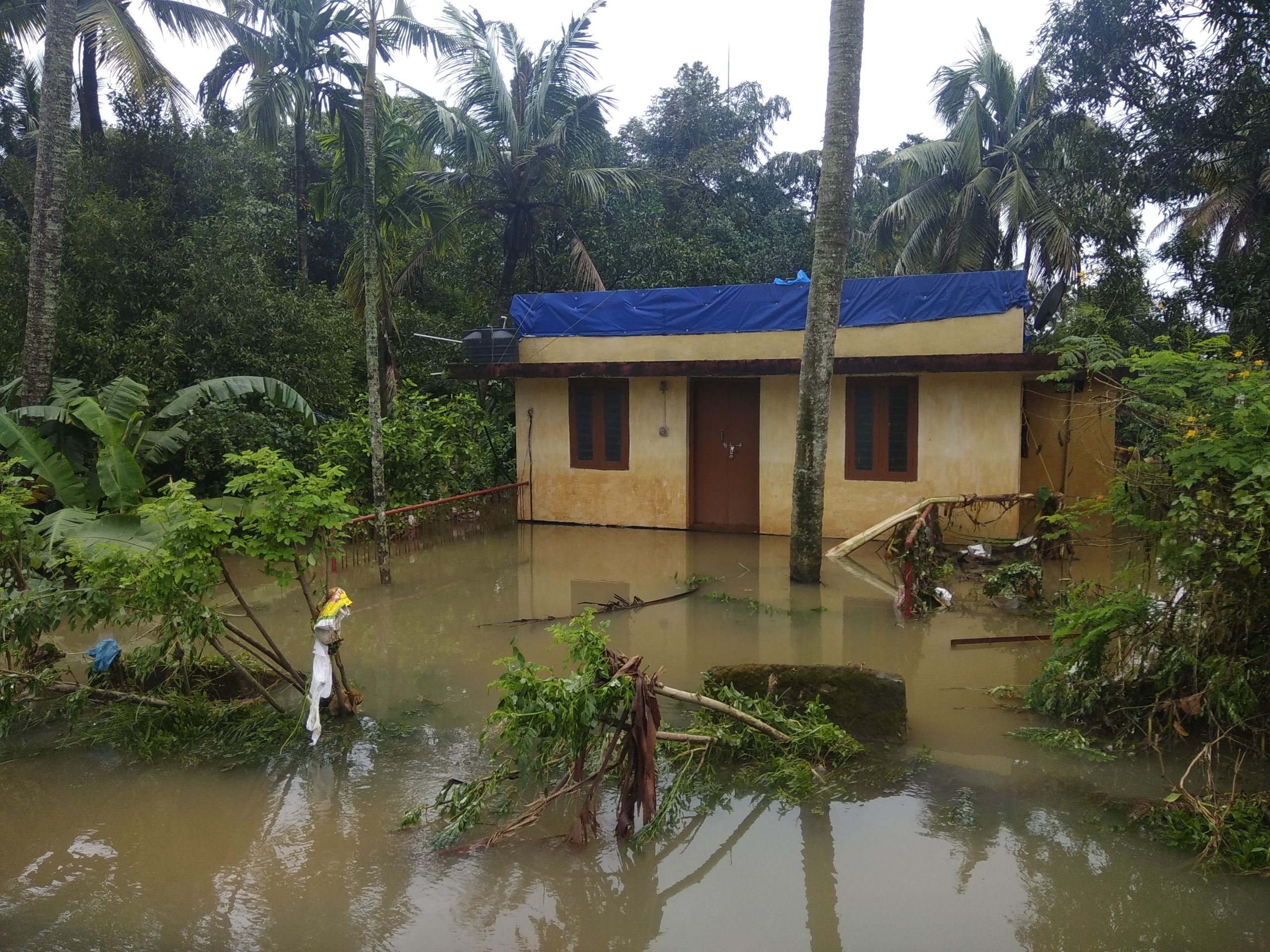
In a flood-prone region in southern India, displacement does not follow a linear trajectory, it is a cyclical occurrence tied to the monsoon season. Families repeatedly anticipate, leave their homes, return and recover according to the intensity of rainfall, necessitating flexible support systems.
Climate-induced displacement is often framed as a rupture, a singular event that causes the affected population to be uprooted. Conceptions of ‘climate refugees’ and planned relocation frameworks tend to share this perspective.[1],[2] However, this framing risks overlooking the complex, cyclical and adaptive characteristics of these movements.[3]
This article explores a temporality of displacement that is recurrent rather than exceptional; a kind of displacement which unfolds in seasonal cycles, where people’s choices are shaped by the frequency and intensity of monsoon rains. Every year between June and September, people leave their homes for weeks or months depending on the duration and intensity of the floods. Some families move to state-supported relief camps, others move in with relatives or friends, leveraging networks based on places of work or religious institutions to find temporary shelters. Once the floodwaters recede, the process of cleaning out the mud, sludge and foul detritus takes considerable time. During severe floods, family members who are in paid work are forced to shift to flood-related tasks such as packing valuables, moving household items to higher ground and cleaning up on return. Their daily routines and practices are modified according to seasonal conditions.
The article draws on ethnographic research in a flood-affected suburb of Ernakulam district in the southern Indian state of Kerala to argue that displacement during floods cannot always be understood as a one-time event. The affected community anticipates the displacement long before it occurs and this anticipation is embedded in the everyday choices made. Recognising this pattern would allow governments, humanitarian actors and development planners to rethink how seasonal displacement might be framed and addressed.
Living in a cycle of displacement
The state of Kerala experienced particularly severe floods in 2018, caused by heavy monsoon rains and the release of excess water from 37 dams.[4] This was followed by floods again in 2019. The intensity of these two floods and their widespread impact across the state attracted attention from the government, news networks and aid agencies. However, the study site discussed here experiences annual monsoon flooding due to its proximity to the river and low-lying terrain. The ward councillor of the area described the location as the first area in the district where water levels rise and the last from which water recedes during monsoon floods.[5]
A 28-year-old resident of the area describes her community’s relationship with the floods as, “ith ipo sheelam ayi” [“this has become a habit”]. This habitual familiarity with monsoon floods shapes the choices residents make across the year, even beyond the monsoon season.
At the onset of the first monsoon rains, families in the area start moving their valuable household items to elevated ground. Houses in the area are sparsely furnished, as furniture often gets destroyed and is difficult to save during floods. Household items are chosen carefully, considering their durability and mobility. Families decide what items are to be packed or moved to elevated spaces within their own or neighbouring houses and what is to be discarded. These decisions are responses based on prior experiences of flooding and strategies improvised with every monsoon flood. Repair works on houses are selective and often made in anticipation of recurrence; while walls are not repainted after floods, they are washed and cleaned; electrical switchboards are replaced to ensure safety. These practices indicate that past floods are never fully past, they linger in the community’s memory and experience and inform everyday adjustments and the choices that they make.
When the water levels rise, families evacuate to temporary shelters or relief camps, but this movement is short term. While the duration of displacement depends on the intensity of rainfall and the extent of recovery required, once the floodwaters recede, return is inevitable. This is because the families in this neighbourhood have made use of government schemes and by borrowing from formal and informal lenders to build their houses.[6] They therefore do not have the further funds needed to relocate permanently. The shift from departure to return recurs not only across successive monsoon seasons but sometimes also within the same season when heavy rains return after brief intervals of respite.
In this flood-prone community, life is built around the arrival and departure of monsoons. Households in the area adjust festive and ritual calendars by deferring ceremonies and events to the latter half of the year. Weddings, naming ceremonies of new-born children or religious observances are postponed if they coincide with the onset of the monsoon due to the risk of flooding.
For residents, flood severity is not measured by technology but by spatial markers within their houses and by how far the water reaches, which objects are damaged beyond repair, and whether they have to leave their homes for relief camps. Informal markers like window sills, doorsteps and switchboards are used to describe the water levels and in turn signal flood intensity. Displacement is thus shaped by the annual variation in water levels determined by these markers.
Displacement here is both temporal and spatial, experienced through leaving, returning and remaking of homes across different phases of the annual monsoon. Families strategise what to protect, move and repair, reflecting their accumulated knowledge of loss, displacement and risk. Unlike dominant narratives which imply institutional interventions and one-off recovery, these adjustments reveal the everyday, cyclical nature of life with floods. The community’s resilience is rooted in the ways both the anticipation of recurring displacement and the need to survive have been woven into their everyday choices.
Official frameworks and invisible displacements
According to the Kerala State Disaster Management Authority, the death toll in the 2018 floods was over 400 people and millions were displaced across the state. For the families in this low-lying area, the experience was an amplification of a cycle they already experience. However, what distinguished 2018 from other years was the attention from the State, national and local media and aid agencies. This meant that relief camps and shelters were better resourced, voluntary work was more organised and compensation schemes were announced. In subsequent years, attention waned again.
There are no reliable mechanisms or support systems that focus on seasonal displacement. While frameworks like the Guiding Principles on Internal Displacement technically cover disaster-induced displacements, in practice local populations, as in this case, are often overlooked. In Kerala, families who evacuate during floods and return home repeatedly are rarely counted as internally displaced persons (IDPs) because their displacement is temporary and embedded in everyday life. This excludes them from compensation schemes, resettlement programmes and recovery initiatives. As a result, recurring losses and the cost of repair accumulate without adequate recognition or support. This gap underlines the need to interpret regulatory protections in ways that include recurrent, seasonal and climate- and/or disaster-induced displacement.
The community members themselves are aware of this invisibility, as reflected in one resident’s statement to me, “No one comes all the way here”: they suggest that local political leaders and media outlets go to easily accessibly flood zones but not to remote locations where floods occur annually. The community’s experience calls into question the binary of displacement versus non-displacement and highlights the importance of recognising cyclical, temporary and repeated forms of movement.
Rethinking displacement
Globally, seasonal and extreme weather events produce recurring displacement that is often temporary. Recognising these aspects of displacement requires more than new terminology. It calls for practical shifts in how the State, aid agencies and development planners design support systems.
This insight demands a reorientation from policymakers and humanitarian actors to include the following priorities:
- Plan relief systems for recurring displacement, and incorporate efficient evacuation methods and training programmes for community volunteers.
- Strengthen local capacities by including community-led strategies in preparedness and state response.
- Monitor displacement patterns seasonally to ensure that recurrent movements are visible and integrated into planning.
- Adapt education systems to the monsoon season by implementing contingency plans such as alternative learning arrangements or flexible scheduling to avoid disruptions.
- Ensure that data collection and baseline assessments capture short-term and seasonal movements to ensure that populations are not excluded from national and international statistics.
- Recognise cumulative losses and the costs of repair and recovery through compensation schemes.
- Subsidise micro-insurance for small businesses, which can help families recover without incurring debt.
- Expand disaster risk financing at state level to include funds for relief and recovery that can be easily arranged and disbursed without delay.
- Ensure cash transfer programmes can be scaled up during monsoon, enabling support and income continuity for daily wage earners whose work is affected.
Integrating recurrence into displacement frameworks allows responses to better reflect the lived realities of communities facing frequent climate- and disaster-induced movements. This means not only recognising returnees who are otherwise rendered invisible but also adapting financial and social protection mechanisms to prevent repeated losses from accumulating into long-term vulnerability. Recognising recurrence is not just about redefining displacement; it is about securing futures for communities who are always leaving but never gone.
Ranjita Dilraj
PhD Candidate, South Asian Studies Programme, National University of Singapore (NUS)
ranjitadilraj@u.nus.edu
linkedin.com/in/ranjitadilraj/
The author gratefully acknowledges the funding support under the Graduate Research Support Scheme, Faculty of Arts and Social Sciences, National University of Singapore, which made the fieldwork for this study possible.
[1] Aleinikoff, T A (2024) ‘Climate-Induced Displacement and the International Protection of Forced Migrants’, Social Research: An International Quarterly, Vol 91(2): 421-444
[2] Ferris E and Bower E (2023) ‘Planned relocations: What we know, don’t know, and need to learn’, Researching Internal Displacement, Vol 15
[3] See more in McAdam J and Ferris E (2015) ‘Planned relocations in the context of climate change: Unpacking the legal and conceptual issues’, Cambridge International Law Journal, Vol 4(1): 137-166
[4] Government of Kerala (2018) Kerala Post Disaster Needs Assessment (PDNA): Floods and Landslides – August 2018, Thiruvananthapuram: Government of Kerala
[5] Ward Councillors are representatives from the community who are elected to the local government.
[6] Families had made use of schemes under the Kerala State Housing Board’s policy of ‘Adequate and Affordable Housing for all’ to build their houses wherein loans and other housing services were provided for those classified as Economically Weaker Sections (EWS) and Low Income Groups (LIG)
READ THE FULL ISSUE